“I Could Have Words with People at Behesht Zahra Cemetery”, Says Sweden’s Ambassador
- Diplomatic Dialogs Exclusive Interviews
admin
- 0
- 24 minutes read
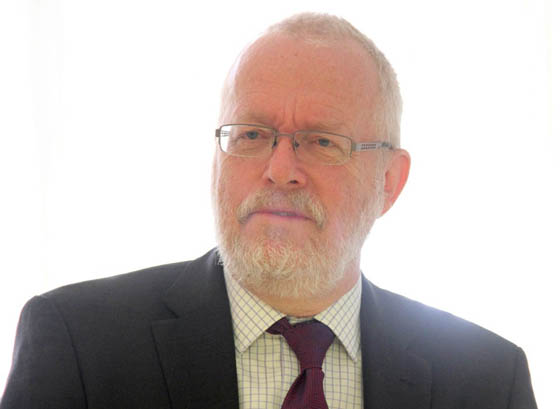
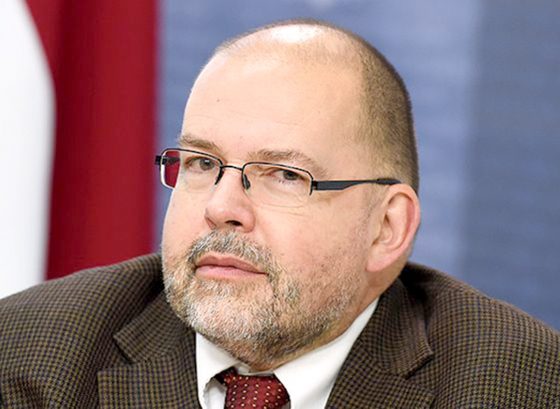
A tenured Swedish diplomat, Peter Tejler, Sweden’s Ambassador in Iran is a well-recognized, admirable politician who served from 1999 to 2003 in Pakistan and Afghanistan as Sweden’s diplomatic representative. For five years, he was appointed the chief of Sweden’s Middle-East sector and vice-president of its embassy in Washington.
Peter Tejler used to serve in Syria, and is entirely familiar with the Middle East. AVA Diplomatic managed to hold an exclusive interview with him, browsing through his memories from his first day in Iran and his getting to know Ahmadinejad and Rouhani.
An Exclusive Interview with Sweden’s Ambassador in Iran, Peter Tejler, by AVA Diplomatic
Interview by Mohammadreza Nazari
Pakistan, Afghanistan and Iran have been places where you have served for 12 years, and, of course, you were active in the U.S. How do you see the relations of the U.S. with other Middle-eastern countries?
You should talk to a U.S. representative in this regard. I, as Sweden’s envoy, cannot comment on Iran-U.S. ties. I should remind you that your President has talked with his American counterpart which, in itself, is a relation.
How do you think Iran and the U.S. can break the ice? How do you find Sweden’s role therein?
That is not easy of a task at all. To work out the problems the two countries should negotiate. When both sides are ready to solve the problems, then, circumstances will become weathered to reach a conclusion. What other countries can do is to create a proper environment. Once again, I stress that living up to such a goal takes a bilateral agreement. A dialog will not pay off by force. In Swedish, we believe that “dialog is the essence of life.”
True that; but trust stands first. The two countries should have trust in each other. How do you come to a vision considering the trust?
I believe it is the dialog which brings about the trust. It is not like the trust exists potentially on its own. It ought to be established. Let me put it another way. I was Sweden’s Ambassador in South Africa and some other African countries. There, it was the dialog that had the black and the white trust each other. In fact, that was how democracy was formed in Africa. In other words, when you earn trust, you are ready for the deal. To work out the existing issues, you should grant some wishes and have some of yours granted.
Back in the time when Mohammad Khatami was in the office, Iran helped the U.S. fight extremism in Afghanistan. But, surprisingly, after a while, Iran was called, along with Iraq and North Korea, the axis of evil, which is denounced by Iran as an inappropriate response to their cooperation.
You are right. But that is totally related to Iran-U.S. relations, and we never declared such a thing in Sweden. What we believe in is establishing a stable Afghanistan. The thing is that Taliban is not the only serious problem there; there is the drug issue, too.
Some of the foreign diplomats resident in Iran agree that Iran and the U.S. need to leave the past behind and take whole new steps forward to establish renewed ties. What is the angle of your government in this regard?
Learning lessons from the past is very important, and so is looking forward to the future. Sweden, too, had undergone such circumstances. We were at war with our neighbors for centuries. The European Union started its mission first with the peace project, which happened as a result of WWII. As a matter of fact, we decided to look at the bright future rather than stare at the past.
So, the point you are making is that the blossoms of peace can bloom between Iran and the U.S. just the way it happened for the E.U.?
Yeah.
How much Iran and Sweden can seek a bright future ahead of themselves with President Rouhani having taken the office?
People and their participation in the election are of sheer importance for their country to interact with other states. We saw that all through Rouhani’s electoral campaigns. That was a significant message. When we talk of interacting with other countries, first we should see who the members of the team are accomplishing such a mission. If they are internationally tenured, then we can approve that there has been a real change in the atmosphere. This aspect helps create a firmer foundation for the negotiations. While negotiating, disagreements are not strange as there exist several different viewpoints on the issue on the table. What matters most is to know where the disagreements exactly originate from to spend more time working them out. New atmosphere is what seems to be noticeable among the members of Iran’s negotiating team. My interpretation is that there have been understandings and awareness regarding the fact that Iran cannot repair its interior problems without maintaining its domestic dimension first. We are pretty much willing to see this interaction happen.
How do you see Iran-Sweden ties in the future?
There are deep, long-existing and fruitful relations between the two countries. Iran’s large community in Sweden can play an important role to take the two countries’ connections to a higher level. If you look back at the history, you see that there were lots of cooperation between Iran and Sweden. The level of travelling between the two countries is considerable as well. Annually, an approximate number of 20 to 25 thousand of Iranian applicants are applying to travel to Sweden. Also, the political relations have always been on an even kneel at the level of the deputy of the Foreign Minister.
Do you know exactly how many Iranians live in Sweden?
Not exactly. But I guess the number ranges from a hundred to 120 thousand of Iranian-Sweden people who are officially Swedish citizens.
How do you think they can visit their mother country?
I do not think binationality is a problem! I think it is the situation and the possibilities which make travelling to Iran happen. According to the international laws, everyone is allowed to visit his mother country.
What approaches have you considered for Iranians to visit their country?
I leave the answer to that question to my colleagues in Sweden who are in charge of Iranians’ affairs. I imagine a number of Swedish people visit Iran each year. Last week, we had a Swedish-Iranian band performing at a concert. We also have some Swedish-Iranian merchants who are constantly coming back and forth. Traveling is very easy for them as they have both Iranian and Swedish passports. That is why they do not need a visa. In tourism also I can set a few examples for you. Before I came here, my sister had traveled to Iran. There are numerous examples as such. You should know not all the Swedish coming here necessarily have a strong accent!
When did your sister come to Iran?
Before I was appointed ambassador to Tehran. Of course, three years ago she came here on a tour and stayed for a month.
You made a point about Iranian-Swedish merchants. On your fireplace, I see the picture of Mohammad Nahavandian, the former chairman of Iran’s Chamber of Commerce, having a meeting with you. How are the economic ties between Sweden and Iran?
At the moment, we are planning for a group of Swedish merchants to travel to Iran. As in the past, the relations between Swedish commercial firms and Iran’s are at a very good level, which were reduced to a lower point due to the sanctions. In 2005, Iran was the largest importer of Sweden’s commodities in the Middle East, and still, the trades are higher than a certain level.
What does consist the majority of such trades?
Telecom products, cumbersome machineries, bus and printing paper.
How was Sweden’s rate of import from Iran? What products were traded?
Of course, it was not as high as its export rate. We have tried to decrease our import of petroleum products. In fact, we are striving to lessen our reliance on petroleum products. Given the fact that oil export forms a major segment of Iran’s export, we tried to have a minor share of oil import from Iran. I do not know exactly what products were agreed upon. But handy crafts like rugs, groceries and food products were the main categories of our trades. And this process did not only happen to the thousand-member community of Iranians in Sweden, and is also true about the Swedish themselves, as they have vested interests in international culinary activities.
Does your embassy’s financial section have a specific plan in this regard?
Trade is a private sector in Sweden, and the bureaus do not call the shots on economic affairs. They do it all themselves.
The embassy of every country contributes to the economic diplomacy thereof. Certainly, Sweden’s Foreign Ministry and Embassy support Swedish merchants.
That is a sure thing. One of our tasks is to help the Swedish companies have better markets in Iran. These are the chances when we can familiarize them with the local markets using our political power. But the commerce itself is done solely by the know-hows of the field. I only bring them to the negotiation table and approve of the Swedish commodities.
Do you have a message for the Swedish merchants?
Iran is a big and important market for us. As history has it, Iranians are pretty good at their payments. That is of importance for us to explain Iran’s economy to the Swedish merchants. Again, I emphasize that Iran is a big market for us.
Some foreign citizens cannot tell Iran from Pakistan and Afghanistan! How different do you see these countries from one another?
It may be very astounding! But these countries are very different from each other in terms of their geography and cultures. Once, I was invited to the house of an Iranian for dinner and there, I understood that the foods are very different in these states. First, in 1992, as the deputy of the Minister, I came to Iran with a political committee, and even back then, Iran could not be compared to Afghanistan, Pakistan or even Iraq. Now, and after years, I came back here and what matters most for me is paying careful attention to the Iranian entity. Three weeks ago, I was to Kabul and there, I realized how important the Afghani entity is. All these differences should be observed, just like the way the Europeans’.
How did you see Iran when you first traveled here?
Tehran was very different. I remember that the Ambassador’s residence was located on the North of Tehran. But when I came back here after 20 years, I saw lots of things have undergone drastic changes. Look out of the window, and see the buildings. Back then, you could spot a beautiful green scenery, and there were no tall skyscrapers like now.
So you confirm that Tehran has made efforts to become modern. Do you consider that a fruitful attempt?
Yes, of course. More modern, and more polluted!
Which provinces have you visited so far?
Shiraz, Esfahan, Kashan, Qom, Hamedan; and I hope one day I can travel to Yazd by car; a place where I crave to see. It is very important for me to drive my own car and talk to people as an ordinary citizen rather than an ambassador.
Do you go on trips driving your own car?
I took a plane to Shiraz, but drove to Behesht Zahra cemetery on my own.
Do you not think that Behesh Zahra cemetery is not a bright and wonderful place to have a tour in?
It may not be a beautiful place, but it is important. It is where I can comfortably communicate with the Iranians.
In such situations, people are entirely emotional and cannot give you a reasonable answer?
I agree. But surprisingly enough, I communicated and received good answers. Although I was a foreigner, they easily responded to my efforts of communication. An experience of talking to people on the streets as a foreigner is very important.
How did you find Iranians’ hospitality?
Iranians are pretty much hospitable, and their fame for it serves them right.
Did you notice that at Behesht Zahra, too?
Definitely. I call this curiosity. We, Swedish people, travel a lot and are curious people, which is, of course, true about Iranians as well.
What did your curiosity result in?
That I learned more about Iran and so did they about Sweden. It is vital to know that for the whole 75 million population exist 75 million facts, and everyone sees the world from their own windows!
What is the image you have given from Iran to the others who live outside the country?
Iran of richest historic and cultural backgrounds. I am not referring to the skyscrapers built here and there! I make a personal example. When I told my children that I am entering Iran as Ambassador, my daughter, who is an architect herself, happily said, “That is amazing. So we will head to Esfahan soon.” She was 22 back then and knew some about Esfahan’s architecture. And, definitely, I will go to Esfahan with my daughter by car in the future.
What was so interesting about Esfahan?
There are many things, but specifically, I can point to its architecture, and to its amazing history as well; the Armenians’ history. The city is by far different from Tehran, and it is relatively close. You can easily go there.
Sweden is the epitome of modern and traditional architecture itself; therefore, when its Ambassador appreciates the beauty of Esfahan, the tourists will be most probably facing a splendid art.
As a point of similarity, I can say that Iran and Sweden have deep roots of civilization. Needless to say that your history is by far more ancient than ours. The central part of Sweden has a long history within itself before the Vikings. The most ancient mansions were built in Stockholm. Another thing is that Sweden is not earthquake-prone, and that is a relief. That is why our architecture has remained unspoiled, intact and technically amusing.
Sweden is ruled by the Monarchy. How is it that the country is ruled under a parliamentary monarchy?
First, you should know much of the background. We are a monarchy and have a King, whose leadership would be assumed by the Queen after him. You should know that the King is the symbol of our country, mainly ceremonial and of no political power. It might interest you that in Sweden, on every third Sunday of each four years’ September, the election is held. The whole political body of the country is elected by the people, and the PM has the highest executive power. We have our parliamentary democracy, and people’s votes are totally noticeable therein. The King is present in the Parliament, and since the eldest child of his is a daughter, hence, our future King will be a women. She will not be calling the tune, yet her position is not to be overlooked. We had pretty bad experiences of national incidents in Sweden. For example, 8 years ago, Thailand was hit with Tsunamis and almost 500 Swedish were killed there. The role the King played in the wakes and funerals was utterly significant and could not be let go unheeded. The Swedish entity equals its monarchy which unifies us. Bear in mind that Sweden hosts lots of immigrants, and of every four people, one has none-Sweden roots. Still, many immigrants come to Sweden from different religions and backgrounds. That is why we care so much about His Majesty’s role.
You spoke of immigration. The spokesman of the Department of Immigration of Sweden recently announced that Sweden is ready to harbor the Syrian immigrants. Does Sweden have such potentials?
Yes. Sweden owns great potentials to receive newcomers. What is decided upon is that we no longer send back the Syrian immigrants to Syria once they step on Sweden’s soil. Annually, an average of 30 to 40 thousand people join Sweden’s population. We also host Afghani immigrants via Iran. Sweden accepts the immigration of 400 Afghani refugees who were in Iran.
As state the statistics in 2013, about 12 thousand jobless immigrants live in Sweden. Do you not agree that the further presence of immigrants can grow problematic?
Sure. I am not saying that immigration is easy. The unemployment rate for those who are not born in Sweden is higher than that of those who are. We should note that religious conflicts have their impacts, too. Most of the immigrants come from different religious and traditional backgrounds with which some have problems at times. Sweden is a non-religious country. There is no law passed in accordance with religion. So, understanding this reality and the concept of Secularism seems to be a hardship for some. We believe that immigration contributes to the economic growth of the country. In fact, it profits both immigrants and us. Then again, I stress that this challenge is of no importance.
You are very much interested in football. How do you find your meeting with the Director General of Esteghlal FC?
Yes. I will show you something. On the seventh day after I came here, there was this match between Iran and South Korea. Iran won the game. My driver acquainted me with Mr. Fathollahzadeh and this way, I met with Mr. Kaffashian.
Who is your favorite soccer player?
Zlatan Ibrahimović. He is half Serb and half Bosnian, but was born in Sweden. Internationally speaking, I like Lionel Messi. In 1958, we had a final match with Brazil, which we lost. That match was Pele’s first international game to play. Iran also made its way to the World Cup 2014.
As a diplomat, your every move and gesture is under microscope and interpreted in a very specific way. In the beginning of your entrance here, you met Ahmadinejad. Why did it go so controversial?
I do not know why it is called controversy. But I do know what was said about it. I can tell you the story: When we go to meet the President, we deliver the credential on our King’s behalf, and have a brief conversation with the head of the government. What happened was a misunderstanding. In Sweden, it is not a controversial omen or gesture to put your feet under one another. When I delivered the credential to the President, I had also brought two books and a piece of paper on me. What I did was very natural; to read the content of the paper, I placed my foot on the other. I gave him a catalog of an exhibition we held in 2007 along with the Persian translation of a Swedish book. He did not seem to be at odds with me at all, and was very happy. A few days later, I saw the pictures published by Iranian websites. There, I saw some photos showing that even some Iranian officials had done the same while in a meeting. I do not think that was an issue. It was only a press hype.
The controversy was not about your act itself; you put the palm of your foot toward the higher diplomatic position, namely the President.
I always change the position where I put my feet. I guess if anyone intends to read unnecessarily into something, he/she can do it with whatever available. I heard from those who were around the President that he did not take offense then.