“We Cannot Assume That Yesterday’s Solutions Will Solve Tomorrow’s Problems.” Believes FAO Representative in Iran
- Diplomatic Dialogs Exclusive Interviews
admin
- 0
- 30 minutes read

Food security is no longer determined solely by the volume of food production; Climate change, pressure on water and soil resources, geopolitical tensions, and disruptions to supply chains have confronted countries with a difficult question: How can sustainable access to healthy food be ensured without undermining the livelihoods of producers or the resilience of ecosystems? For Iran, which faces scarce water resources and the need to improve agricultural productivity, this question is closely linked to rural development, biodiversity conservation, and the trade of food products. Central to this is the question of how knowledge and technology can be translated into practical solutions that are accessible to farmers. Is increased production compatible with the conservation of natural resources and the sustainability of local communities’ livelihoods? What role does international cooperation play in this process?
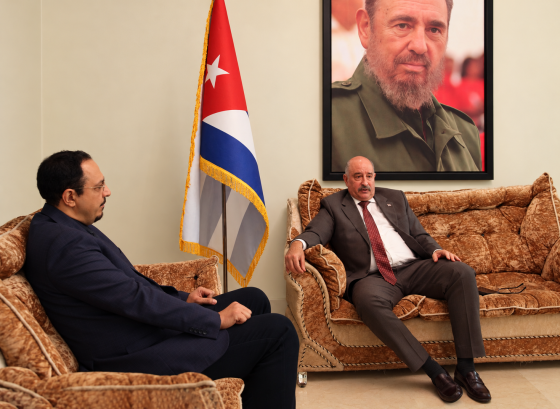
To explore the challenges of food security, the transformation of agrifood systems, and the prospects for technical cooperation between FAO and Iran to advance sustainable agriculture, we conducted an interview with Mr. Farrukh Toirov, Representative of the Food and Agriculture Organization of the United Nations (FAO) in the Islamic Republic of Iran, which you can read below.
AVA Diplomatic’s Exclusive Interview with
Mr. Farrukh Toirov, FAO Representative to the Islamic Republic of Iran
As the FAO Representative to the Islamic Republic of Iran, how do you assess the current trajectory of global food security amid the combined pressures of climate change, geopolitical tensions, economic uncertainty, and disruptions to agricultural supply chains?
The global picture is mixed. There has been some encouraging progress: according to the 2026 edition of The State of Food Security and Nutrition in the World, global hunger declined for a third consecutive year. An estimated 645 million people, or 7.8 percent of the world’s population, faced hunger in 2025, around 43 million fewer than at the 2022 peak. Moderate or severe food insecurity also declined but still affected around 2.1 billion people. So, progress is possible, but the numbers remain unacceptably high and very uneven across countries and regions.
What concerns FAO is the growing interaction among different risks. Climate extremes can reduce production; conflict can interrupt trade, transport and access to inputs; economic instability can increase the price of food, fertilizer and energy; and these shocks ultimately affect household purchasing power and farmers’ capacity to produce. Today’s agrifood systems are highly interconnected—more than one fifth of the calories consumed globally across international borders—so disruption in one region can rapidly be transmitted elsewhere.
The policy lesson is that we can no longer approach food security simply as a question of producing more food. We need resilient agrifood systems that can anticipate, absorb and recover from shocks while continuing to provide affordable and nutritious food and sustainable livelihoods. This means moving from repeated crisis response towards resilience-building, diversifying production and supply chains, strengthening social protection and early-warning systems, investing in climate-resilient agriculture, and keeping international agricultural trade open and predictable. This is fully consistent with FAO’s Strategic Framework and its vision of more efficient, inclusive, resilient and sustainable agrifood systems.
From FAO’s perspective, what are the most significant structural transformations required to achieve more resilient, productive, inclusive and environmentally sustainable agrifood systems in the coming decade?
FAO sees transformation as a systems change, rather than a collection of isolated agricultural interventions. The objective is to deliver simultaneously better production, better nutrition, a better environment and a better life, leaving no one behind. FAO’s Strategic Framework identifies technology, innovation, data and stronger governance and institutions as key accelerators of this transformation.
I would highlight several structural shifts. First, we need to move from input-intensive towards knowledge- and innovation-intensive agriculture—producing more and better with less water, fertilizer, energy and environmental impact. Second, agricultural policy needs to look beyond primary production and address the whole value chain, including storage, processing, food loss, safety, logistics and markets. Third, natural resources, particularly soil, water, biodiversity, forests, rangelands and aquatic ecosystems must be treated as productive assets that need to be maintained rather than depleted.
Fourth, transformation must be inclusive. Smallholders, women and young people need equitable access to technology, finance, markets, knowledge and productive resources. And finally, we need better integration between agriculture, climate, water, health, biodiversity and rural-development policies. FAO increasingly promotes this type of integrated, country-led approach, because agriculture cannot be made resilient through sectorial silos.
Climate change is reshaping agricultural production worldwide through droughts, floods, heat waves, and biodiversity loss. In your view, what should be the balance between climate adaptation and climate mitigation within agricultural policy?
For agriculture, particularly in arid and semi-arid countries such as Iran, adaptation is an immediate necessity. Farmers are already experiencing the consequences of rising temperatures, prolonged droughts, changing rainfall patterns, floods and other extreme events, as well as increasing pressures from pests and diseases. Agricultural policies therefore need to prioritize the resilience of production systems, natural resources and rural livelihoods.
At the same time, adaptation and mitigation should not be treated as competing objectives. FAO’s Strategy on Climate Change promotes both climate-resilient adaptation and mitigation across agrifood systems. Many agricultural interventions can deliver benefits on both fronts. Better soil management, for example, can improve water retention while increasing soil carbon; more efficient fertilizer use can reduce both production costs and emissions; improved livestock management can increase productivity while lowering emissions intensity; and reducing food loss and waste avoids unnecessary use of land, water and energy.
The appropriate balance must therefore be country- and context-specific. In highly climate-vulnerable countries, adaptation and food security necessarily require particular attention, while mitigation opportunities should be pursued wherever they reinforce productivity, resource efficiency and resilience. FAO’s role is to help countries identify these synergies and integrate them into their climate policies, Nationally Determined Contributions and National Adaptation Plans.
This is precisely where international climate finance and FAO’s technical expertise can complement national capacities, moving from identifying climate risks to developing concrete, prioritized and investable adaptation measures that can strengthen the long-term resilience of the agrifood systems.
Digital technologies including artificial intelligence, precision agriculture, remote sensing, and big data are rapidly changing agricultural decision-making. How does FAO envision these technologies contributing to sustainable and equitable food systems, particularly in middle-income countries?
 Digital technologies can fundamentally improve the way agricultural decisions are made. Remote sensing can help monitor crops, drought, land degradation and water use; precision agriculture can improve the efficiency of irrigation and fertilizers; digital advisory systems can deliver weather, pest and market information directly to farmers; and artificial intelligence can increasingly help analyze large datasets and support earlier and more targeted decisions.
FAO therefore treats digital agriculture as an accelerator of agrifood-system transformation. But technology alone is not the objective. The important question is whether it solves a real problem and whether farmers can use and afford it. For very same reason, development and promotion of digital tools should be combined with community engagement and capacity development to ensure effectiveness and sustainability of the mechanism in long run. FAO emphasizes the need to address the digital divide so that smallholders, women and rural youth are not excluded from the benefits of innovation.
For middle-income countries such as Iran, I see significant potential for combining strong national scientific capacities with practical farm-level applications—for example, remote sensing and agro-meteorological information for water management, precision irrigation, digital pest surveillance, traceability in high-value agricultural products, and data-driven extension services. The most successful technologies will be those that are technically sound, locally adapted, affordable and, importantly, scalable.
FAO is continuously exploring opportunities to introduce and expand relevant digital and smart-agriculture solutions through its program in Iran. We already have some practical examples. Under FAO’s initiative supporting the Bactrian camel production system, FAO supported the further development and extension of the “Sareban-Yar” digital tool, providing digital services for camel monitoring and management and improving access to information needed by producers and livestock-sector stakeholders.
Another particularly important example is our work in the Lake Urmia Basin, supported by the Government of Japan. Here, digitalization and precision agriculture are being integrated directly into our approach to addressing water scarcity. FAO is promoting precision agriculture technologies that combine subsurface irrigation systems with sensors and digital applications to monitor and optimize irrigation and agricultural inputs at farm level. The objective is not simply to introduce new technology, but to demonstrate how technology can generate measurable improvements in water-use efficiency and agricultural productivity.
This is particularly important in the Lake Urmia context because we are pursuing two objectives simultaneously: reducing agricultural water consumption and contributing to the restoration of Lake Urmia, while maintaining or increasing farm productivity and therefore protecting farmers’ livelihoods. In our pilot orchards, the approach is intended to demonstrate that environmental restoration and agricultural production do not necessarily have to be competing objectives when appropriate technology, data and farm-management practices are brought together.
For FAO, these initiatives also provide an opportunity to test technologies under Iranian conditions, generate evidence on their performance and cost-effectiveness, and, where successful, develop models that can be replicated and scaled up by the Government, farmers and the private sector. This is ultimately how we see digital agriculture contributing to agrifood systems transformation in Iran—not technology for its own sake, but technology as a practical tool for greater efficiency, resilience and sustainability.
Rural development is closely linked to employment, migration, and social stability. What policy mix has proven most successful in creating sustainable economic opportunities for rural communities?
There is no single instrument. The strongest results come from combining productive investment, value-chain development, access to services and markets, social protection and local institution-building. Agriculture remains central, but rural development cannot depend exclusively on increasing primary production. Rural economies need processing, storage, logistics, agritourism, renewable energy, ecosystem restoration, digital services and other complementary sources of employment and income. Strengthening farmer organizations and cooperatives can also improve bargaining power and access to markets.
Young people are particularly important. Rural youth need access to skills, technology, finance and viable businesses if agriculture is to remain attractive. FAO promotes decent rural employment that combines income opportunities with workplace security, social protection, and women empowerment. This is also closely linked to migration. FAO’s position is that migration should be a choice rather than a necessity. When rural livelihoods are resilient and communities have real economic prospects, households are better able to decide whether to remain, diversify their livelihoods or migrate voluntarily rather than being forced to move by poverty, climate shocks or resource degradation.
We are applying this same principle in the country through FAO’s ongoing project “Empowering Local Communities to Conserve and Develop Endangered Indigenous Livestock Gene Pool in the Northwest of Iran.” The project works with the Ministry of Agriculture Jahad to strengthen local communities while conserving endangered and at-risk indigenous livestock genetic resources, Sarabi Cattle, Markhoz Goat, Mahabadi Goat and Bactrian Camel. The underlying approach is that conservation of agriculturally important biodiversity will be sustainable only when it is effectively integrated into local livelihoods and creates tangible economic and social benefits for the communities that maintain these breeds. The project therefore seeks to link genetic-resource conservation with capacity development, sustainable use, value addition and stronger livelihood opportunities in rural areas.
We are also discussing with the Deputy President’s Office for Rural Development and Deprived Areas the possibility of a broader complementary partnership that could build on and extend the scope of this initiative. The intention would be to move beyond the initial technical conservation interventions towards a more integrated rural-development approach, including improved livestock infrastructure, value-chain and processing development, market access, sustainable rural enterprises and the promotion of green jobs and diversified livelihood opportunities for local communities. In this way, biodiversity conservation becomes not an isolated environmental objective, but a practical driver of sustainable rural development and community resilience.
This kind of approach reflects an important principle for FAO: rural development, biodiversity conservation and livelihood improvement can reinforce one another when local communities have a clear economic stake in the sustainable management of their natural and agricultural resources.
Climate-smart agriculture has been one of your professional priorities. What practical opportunities do you see for expanding climate-smart agricultural practices across Iran’s diverse farming systems?
Iran’s ecological and agro-climatic diversity means that there cannot be a single climate-smart agriculture package applicable everywhere. Solutions need to be location-, crop- and farmer-specific, responding to different combinations of water scarcity, salinity, temperature, soil conditions, production systems and farmers’ capacities.
FAO’s recent experience in Iran demonstrates the potential of field-based approaches that combine improved irrigation, soil and nutrient management, integrated pest management, improved varieties and farmer capacity development. In pistachio-growing areas, for example, FAO has worked with farmers to demonstrate practical responses to drought and water scarcity, combining scientific and technical recommendations with farmers’ field-level knowledge and experience.
In the Lake Urmia Basin, through a project funded by the Government of Japan, FAO is taking this approach further by combining climate-smart agriculture with precision agriculture and improved water management. Our work includes precision and subsurface irrigation technologies together with other efficient irrigation systems, sensors and digital tools, alongside climate-smart agricultural practices. The objective is to demonstrate how agricultural water consumption can be reduced while maintaining or improving productivity and farmers’ livelihoods. This is particularly important for Lake Urmia because real and measurable water savings in agriculture can contribute to restoration of the lake while ensuring that the transition remains economically viable for farming communities.
We are also working beyond the national level. Through the regional Technical Cooperation Project “Building capacity on sustainable production and promotion of climate smart and nutrient dense crops to strengthen food and nutrition security in Asia”, FAO is working with the Islamic Republic of Iran, Afghanistan, Bhutan, and Mongolia to promote climate-resilient and nutrient-dense crops, particularly quinoa, millets and soybean. The initiative combines improved germplasm and varieties with participatory varietal selection, Good Agricultural Practices (GAP), Farmer Field Schools and field demonstrations. Importantly, it does not look only at production: it also addresses value chains, marketing, knowledge exchange and national capacity, helping create the conditions for successful varieties and practices to move beyond individual demonstration plots.
The opportunity in Iran is therefore to connect what we are learning from initiatives such as Lake Urmia, the regional climate-resilient crop program—moving from isolated pilots towards evidence-based adaptation models that Government, farmers and the private sector can replicate at scale.
Food safety and biosecurity are critical components of public health and international trade. How is FAO supporting Iran in aligning its food safety systems with international standards and regulations?
 This is an area where FAO has been particularly active, both globally and in Iran. At the global level, the foundation is the Codex Alimentarius, jointly established by FAO and WHO, which provides internationally recognized food standards, guidelines and codes of practice. But standards alone are not enough: countries also need the institutional capacity, laboratories, traceability systems, good production and post-harvest practices, and trained value-chain actors required to implement them. Two recently completed FAO projects in Iran—on pistachio quality and export and saffron authenticity and traceability—provide good examples of this integrated approach.
In the pistachio value chain, FAO worked with the Ministry of Agriculture Jahad and a broad range of national institutions, laboratories, producers, processors and exporters to address food safety and market-access constraints across the entire supply chain. The project covered GAP and Integrated Pest Management (IPM) at farm level, harvesting and post-harvest management, processing, aflatoxin and other contaminant control, laboratory capacity, tracking sanitary and phytosanitary (SPS) and technical barriers to trade (TBT) measures compliance, traceability and export requirements. It developed more than 40 technical documents and guidelines and strengthened coordination among the institutions responsible for production, food safety and export control.
A particularly important area was aflatoxin and contaminant management, because these directly affect both consumer safety and access to international markets. FAO supported technical guidance covering aflatoxins, ochratoxin A, pesticide residues, heavy metals, sampling, packaging, lot identification and export controls. FAO technical missions also assessed Iranian laboratories and sampling procedures against international and European Union requirements and provided recommendations on analytical quality systems, inter-laboratory benchmarking, confirmatory testing and risk-based controls. A High Performance Liquid Chromatography system was also provided to strengthen national capacity for reliable aflatoxin detection.
Traceability was another major component. The project developed a specific procedure for pistachio exports to the European Union covering farm registration, GAP implementation, chemical-use records, accredited laboratory testing, phytosanitary certification, packaging controls, lot identification and electronic monitoring. It also introduced practical approaches such as lot coding, QR-code-linked traceability and batch tracking. This illustrates how food safety works increasingly connect traditional standards and laboratory controls with digital technologies.
Our second example is saffron, where the challenge is somewhat different. Because saffron is a very high-value commodity, authenticity, adulteration and traceability are particularly important. FAO used saffron as a pilot value chain for strengthening Iran’s capacity to prevent and detect food fraud. The project developed an ISO 3632-aligned verification methodology, Good Manufacturing Practice guidance for drying and storage, and a vulnerability assessment and saffron authenticity action plan. It also analyzed 90 geo-referenced saffron samples using UV, HPLC and chemical fingerprinting; creating baseline information that can support future authenticity verification and traceability.
Importantly, this work was not confined to laboratories. FAO developed a five-module Saffron Defense Mitigation Strategies Toolkit covering GAP, good manufacturing practices, fraud prevention, traceability, authentication, post-harvest management, certification, marketing and trade, and introduced it to 122 stakeholders. The project also introduced Iranian stakeholders to emerging technologies including artificial intelligence, spectroscopy and chromatography, DNA barcoding, rapid authenticity testing, digital traceability and blockchain applications.
So, for FAO, food safety, authenticity and market access are interconnected. Stronger food-control and traceability systems protect consumers and reduce food fraud, but they also protect producers. When an exporting country can demonstrate product origin, safety and authenticity through internationally recognized standards and credible testing systems, it reduces the risk of rejected consignments, strengthens confidence among trading partners and improves the competitiveness and reputation of its agricultural products. For Iran, where products such as pistachio and saffron have considerable international market potential, strengthening these systems can therefore contribute simultaneously to public health, producer livelihoods and more sustainable access to international markets.
Livestock, fisheries, and aquaculture play important roles in Iran’s agricultural economy. Which areas within these sectors offer the greatest potential for sustainable growth through FAO-supported cooperation?
In livestock, FAO’s engagement in Iran provides a good example of how conservation of animal genetic resources can be linked with productivity, climate resilience and rural livelihoods. The country has important indigenous breeds that have adapted over generations to difficult local climatic and ecological conditions, but some populations are now endangered. FAO’s approach therefore goes beyond simply conserving genetic material: it combines in-situ conservation, genetic improvement, reproductive technologies, animal health and nutrition, community-based breeding, value-chain development and livelihood support.
A good example of work already completed is FAO’s Technical Cooperation Program project on the conservation and promotion of the Bactrian camel in Ardabil Province. At the start of that intervention, only around 200 purebred Bactrian camels were estimated to remain in the region. Working with the Ministry of Agriculture Jahad and local herders, FAO supported conservation and breeding activities while strengthening the technical capacity of both government institutions and pastoral communities.
The project produced several practical results. FAO supported semen cryopreservation, artificial insemination and embryo-transfer operations, procured equipment for establishing a germplasm hub, and introduced microchip-based animal identification. A customized digital application—Sareban Yar—was further extended for identification, pedigree and performance recording.
Importantly, the intervention also demonstrated that genetic conservation could support local livelihoods. A Bactrian camel herders’ cooperative was established, equipment was provided for feed processing, and FAO supported exploration of value addition from camel wool. Nomadic women received training and equipment for wool and milk processing, creating opportunities for self-employment and additional household income. The project ultimately developed a comprehensive national breeding plan covering not only genetics and reproductive technologies but also range management, nutrition, animal health, housing, product processing and even agrotourism.
FAO is now building on this experience and expanding the approach to other endangered indigenous livestock breeds in northwest Iran through a new two-year project. In addition to the Bactrian camel in Ardabil, the program covers Sarabi cattle in East Azerbaijan, Mahabadi goats in West Azerbaijan and Markhoz goats in Kurdistan. These indigenous breeds represent valuable genetic resources because of their adaptation to local environmental conditions, but their conservation needs to be economically meaningful for the communities that maintain them.
The new project therefore places local communities at the center of conservation. It will establish community-based breeding programs, complete pedigree and performance records for pilot populations, analyze inbreeding, assess nutritional and animal-health constraints, and apply advanced reproductive technologies including artificial insemination, embryo transfer and cryopreservation of semen and embryos. It will also develop a strategy for genetic characterization, conservation and improvement of the targeted animal genetic resources.
At the same time, the project explicitly connects conservation with income and market opportunities. More than 120 local herders are targeted for training in breeding, management, value chains and marketing; milk collection and processing facilities are planned for Mahabadi goats and Sarabi cattle, together with a mohair processing facility for Markhoz goats. The project will also support rehabilitation of degraded grazing areas and development of a grazing strategy, as well as marketing strategies for indigenous livestock products.
So, looking forward, I see considerable scope for FAO–Iran cooperation in animal genetic resources, animal health and One Health, reproductive technologies, sustainable feed and nutrition, community-based breeding, sustainable rangeland management and livestock value chains. The experience with Bactrian camels and the new northwest Iran project shows the direction quite well: preserving indigenous breeds not simply as genetic resources, but by making them more resilient, productive and economically valuable to the rural and pastoral communities that ultimately sustain them.
Finally, what message would you like to convey to policymakers, researchers, farmers, development practitioners, and the international community regarding FAO’s long-term vision for advancing sustainable agriculture, food security, and resilient agrifood systems in Iran and beyond?
 My central message would be that the challenges are serious, but the solutions are within reach if we act collectively, innovatively and on a sufficient scale.
Agriculture is already facing simultaneous pressures from climate change, water scarcity, land degradation, biodiversity loss, economic uncertainty and geopolitical shocks. But we should also recognize that the world in which agriculture operates is changing rapidly. In addition to the challenges we have dealt with in the past, we will increasingly face new challenges with different characteristics. Climate patterns are shifting; temperature and rainfall regimes are changing; extreme events are becoming more disruptive; and pests and diseases may emerge, spread or affect production systems in ways that were previously uncommon. At the same time, markets, consumer expectations, international standards and global norms governing food and agriculture are also evolving.
This means that we cannot assume that yesterday’s solutions will solve tomorrow’s problems. Practices, technologies and policies that worked under previous climatic, ecological or economic conditions may no longer be sufficient. We therefore need a much more dynamic approach to agrifood-system transformation—one that continuously brings together climate and environmental information, scientific evidence, farmers’ knowledge, socioeconomic realities, market developments and emerging risks, and adjusts our solutions as these conditions change.
The encouraging side of this transformation is that science, technology and knowledge are also advancing rapidly. Digital agriculture, remote sensing, artificial intelligence, biotechnology, precision farming, improved genetics, advanced water-management technologies and increasingly sophisticated early-warning and decision-support systems are creating possibilities that were simply not available to previous generations. The challenge is to ensure that these innovations are translated into practical, affordable and locally adapted solutions that actually reach farmers and rural communities.
This is why I see innovation as fundamental, rather than optional, for the future of agriculture. Innovation does not necessarily mean introducing the most sophisticated technology. It can be a new technology, but it can equally be better farming practice, a new institutional arrangement, a more effective financing mechanism, a digital extension service, a new partnership with the private sector, or a more efficient way of connecting scientific research with farmers’ traditional and practical knowledge. What matters is our capacity to continuously learn, adapt and develop solutions appropriate to changing circumstances.
FAO’s long-term vision is captured in the Four Betters: better production, better nutrition, a better environment and a better life, leaving no one behind. For Iran, this means producing more efficiently with increasingly scarce water and land resources; protecting soils, biodiversity and ecosystems; strengthening food safety and value chains; improving resilience to drought, climate extremes and emerging biological threats; and ensuring that farmers and rural communities remain at the center of transformation.
The Islamic Republic of Iran has significant scientific institutions, experienced farmers, diverse agricultural systems and considerable technical capacity. FAO’s role is to complement these strengths by bringing global knowledge, standards and innovation; connecting national expertise with international experience; facilitating South-South and other forms of technical cooperation; mobilizing partnerships and financing; and, importantly, helping test and adapt innovative approaches under Iranian conditions so that successful models can subsequently be scaled up nationally.
Ultimately, agrifood-system transformation cannot be achieved by international organizations alone. It requires research institutions, universities, farmers, the private sector, civil society, development partners and communities working together. And because the environment in which we operate will continue to change, our response cannot be static either. We need a dynamic formula—one that combines science and innovation with local knowledge, continuously assesses emerging risks and opportunities, and adapts our policies and investments accordingly.
Our objective should therefore go beyond responding to today’s challenges. It should be to build an agrifood system with the capacity to anticipate, innovate and adapt—one that is sufficiently resilient and flexible not only to address the problems we already know, but also those that the next generation will face.