Hungary Calls for Boosting Mutual Cooperation with Iran
- Uncategorized
admin
- 0
- 4 minutes read
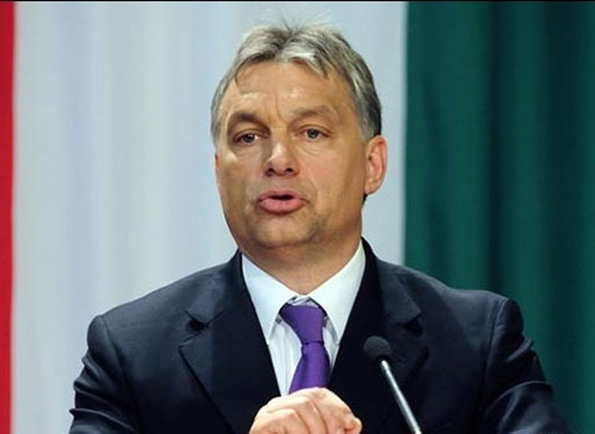
Hungarian Prime Minister Viktor Orbán voiced his country’s willingness to broaden bilateral ties with Iran in different fields, AVA Diplomatic reports.
“Budapest and Tehran need to further expand their relations in the post-sanctions era,” Orbán said, addressing a ceremony in Budapest on Thursday.
He pointed to the decades-long sanctions imposed against Iran, and said, “Every opportunity needs to be grabbed to help the Iranians get back to the ‘blood circulation’ of the international society.”
In relevant remarks in late January, Hungarian Parliament Vice-Speaker István Jakab voiced his country’s willingness to expand all-out cooperation with Tehran.
“My country is eager to broaden its bilateral ties with Iran and the structure and framework of mutual cooperation in the future need to be drawn up and confirmed by the two sides,” Jakab said in a meeting with his Iranian counterpart Mohammad Hassan Abutorabifard in Tehran.
He reiterated that the two countries can increase their cooperation in agriculture and livestock breeding.
The Hungarian vice-speaker also called for more scientific and cultural cooperation between the two sides.
Iranian and Hungarian officials in a meeting in early December agreed to set up a joint cooperation commission to broaden their economic and trade relations.
The agreement was signed between Iranian Communications and Information Technology Minister Mahmoud Vaezi and Hungarian Minister of National Development Miklós Seszták in Tehran.
“We agreed to set up a commission to expand mutual cooperation between the two countries and which will have biannual meetings,” Vaezi told reporters after the meeting.
The Iranian communications and information technology minister also noted that during the meeting the two sides signed eight cooperation pacts in different areas, including communication and information technology, and said, “We showed that we are interested in expansion of bilateral ties by both countries’ governmental and private sectors.”
Vaezi said that half of Hungary’s cabinet members and representatives of 60 private companies are accompanying the Hungarian prime minister in his ongoing visit to Iran.
In relevant remarks in September, Iranian President Hassan Rouhani underlined that Iran and Hungary enjoyed the needed potential and possibilities for developing their ties, and stressed the need for both sides to take the present opportunity.
“There is a need for bringing about positive and more constructive changes in the Tehran-Budapest relations,” President Rouhani said in a meeting with new Hungarian Ambassador to Tehran Janos Kuac at the time.
The Iranian president, meantime, pointed to the refugees’ plight in the West, and said, “At a time when people of the regional countries are in trouble and suffering, it is the humanitarian obligation of the European governments to host them.”
Kuac, for his part, underlined that his government is making all-out efforts to boost the level of mutual cooperation with Iran in political, economic, cultural, agricultural and educational fields.
He described Iran as a center of stability and security in the region, and said, “Iran’s nuclear agreement with the West is a proper model for the world governments to settle international disputes through peaceful means.”