Vietnam’s Ambassador to Iran: “No One Should Be Left Behind on the Path of Development”
- Diplomatic Dialogs Exclusive Interviews
admin
- 0
- 23 minutes read
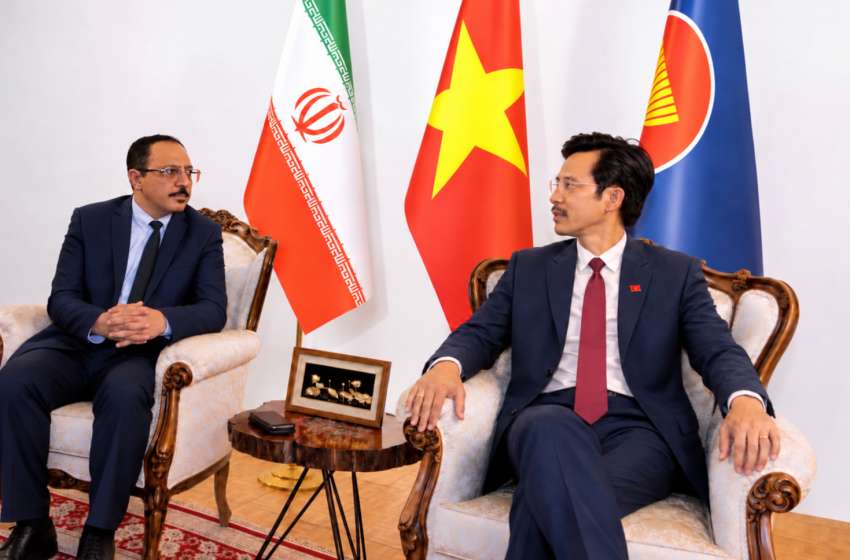
The 14th National Congress of the Communist Party of Viet Nam (CPV), through the introduction of the concept of the “Era of National Ascent,” has outlined a new phase in the country’s development trajectory; one aimed at moving beyond a growth model based solely on economic expansion toward a comprehensive development framework driven by innovation, digital transformation, green economy, institutional reform, and the enhancement of governance quality. According to the Ambassador of the Socialist Republic of Viet Nam to Iran, this new approach reflects a strategic transformation in Viet Nam’s development outlook, representing the country’s efforts to overcome emerging challenges while building sustainable capacities for national progress and assuming a more proactive role in global affairs. He emphasizes that Viet Nam’s development philosophy is grounded in the principle of “the people as the root,” underscoring that economic growth must advance in parallel with social equity and the assurance of benefits for all segments of society.
In order to examine Viet Nam’s experience in economic reform, its development priorities toward 2030, and the future prospects of Tehran–Hanoi relations, AVA Diplomatic conducted an exclusive interview with Mr. Nguyen Luong Ngoc, Ambassador of the Socialist Republic of Viet Nam to Iran, which you can read below.
AVA Diplomatic’s Exclusive Interview with
Mr. Nguyen Luong Ngoc, Vietnam’s Ambassador to Iran
The Congress highlighted that Viet Nam’s GDP scaled to USD 514 billion in 2025, with a PPP-based GDP reaching USD 1.559 trillion, ranking 25th globally. Looking back to the 1986 crisis and 774% hyperinflation, what were the most critical “renewed thinking” shifts within the CPV (Communist Party of Viet Nam) leadership that successfully transitioned the country into a dynamic, socialist-oriented market economy?
The decisive turning point for the Communist Party of Viet Nam in 1986 was the “renewal of thinking”, which marked a sharp transition from a centrally planned mechanism to a socialist-oriented market economy. To realize this vision, the Party implemented three strategic shifts: (i) transitioning from a centralized planned economy and state monopoly to promoting the private sector; (ii) shifting from denying to respecting objective market laws; and (iii) expanding from exclusive relations with socialist countries to establishing friendly relations with all nations, regardless of political regime.
This historic decision unleashed the country’s internal potential and resources, broke through embargoes, and attracted maximum external resources, laying the foundation for Viet Nam’s rapid development over the subsequent 40 years.
The 14th Congress officially characterized the upcoming period as the “Era of National Ascent.” Could you elaborate on the philosophical and political meaning of this term? How does this new phase fundamentally differ from previous decades, which were focused on economic stabilization and growth?
The “Era of National Ascent” charted by the 14th National Congress represents a strategic turning point, shifting our mindset from “focusing on stabilization to overcome challenges” to “building an ecosystem to break through and develop.”
Philosophically and politically, this marks a historic repositioning: Viet Nam has transformed from a passive subject of external impacts into an active “actor” shaping its own destiny and contributing to global prosperity. Moving forward, we recognize that our window of opportunity to rise is narrow, requiring decisive action to avoid falling behind.
Unlike previous decades, this new era is anchored in strategic breakthroughs in institutions, science, technology, and innovation, with a strong emphasis on growth quality, underpinned by digital transformation, green transition, and human development. This is the strategic roadmap for Viet Nam to become an industrialized developing country with upper-middle income by 2030, and a developed, high-income, prosperous, and happy nation by 2045.
The 13th Congress term (2021–2025) witnessed an unprecedented administrative restructuring, consolidating 64 provinces and cities down to 34, reducing 5 ministries, and removing over 100,000 personnel positions. What drove this drastic streamlining of the political apparatus, and how has this anti-bureaucratic “revolution” cleared institutional bottlenecks for economic growth?
This constituted a sweeping institutional revolution to “streamline the national landscape”, ensuring a transparent, lean, and agile public administration. This move has maximized the release of national productive forces, conserved resources for investment and development, fostered tighter regional integration, and consolidated unified central leadership. Consequently, major national decisions can now be implemented far more swiftly and efficiently.
The Congress documents strongly emphasize the principle of “people as the root,” noting a sharp drop in multi-dimensional poverty to 1.3% and a rise in the Happiness Index by 33 places. How does the CPV practically balance rapid, high-openness market growth with social equality and inclusive public services to prevent the massive wealth gaps seen in other developing economies?
In Viet Nam, the philosophy of “the people as the root” serves as the guiding light for development. Human beings are simultaneously the objective, the driving force, and the ultimate beneficiary of development. We do not trade social equity for mere economic growth; instead, the State proactively acts as an enabler to ensure growth dividends are fairly distributed across all segments of society. This principle is consistently embedded in all development policies—from central to local levels and across long-term horizons. The State of Viet Nam is firmly committed to ensuring that “no one is left behind” along our development path.
For the 2026–2030 period, Viet Nam is striving for an ambitious average annual GDP growth rate of 10% or higher, aiming for a per capita income of USD 8,500 by 2030. Given the volatile global economic environment and fierce strategic competition, what specific new growth models will Ha Noi deploy to achieve this double-digit momentum?
To achieve the target of over 10% growth for the 2026–2030 period, Viet Nam has established a “New Growth Model” built upon three pillars:
First, Institutional Breakthroughs and Decisive Removal of Bottlenecks: Advancing radical decentralization and delegation of power to grant maximum autonomy and accountability to ministries, sectors, and local authorities.
Second, Growth Model Innovation: Transitioning toward an economy driven by science, technology, semiconductors, AI, digital transformation, and green transition, thereby restructuring the economy and elevating our position in the global value chain.
Third, Resource Optimization and Strategic Autonomy: Prioritizing targeted investments in strategic infrastructure rather than spreading resources thin, while building “strategic autonomy” to safeguard national security and enhance resilience against global shocks.
The Congress identified institutions as the “bottleneck of bottlenecks” but also the “breakthrough of breakthroughs.” What specific legal, regulatory, or institutional reforms are currently being prioritized to unleash private sector resources and attract further Foreign Direct Investment (FDI), which has already surpassed USD 520 billion?
To unlock private resources and attract next-generation FDI during the 2026–2030 period, we are prioritizing three strategic policy directions:
– Shifting the mindset from “management” to “enabling”: Aiming to foster a level playing field where the private sector is not merely an object of regulation, but a strategic partner in national development. While domestic resources remain decisive, FDI is a vital complementary force.
– Shaping a Next-Generation FDI Ecosystem and Regulatory Sandboxes: Transitioning away from pure capital scale to prioritize FDI in emerging economic models and strategic technologies (AI, green energy, and financial technology), while scaling back resource-intensive and environmentally harmful sectors.
– Refining the Legal Framework: Continuously improving the legal environment to offer optimal conditions and incentives for investors, while requiring foreign enterprises to implement genuine technology transfer and integrate domestic enterprises into the FDI ecosystem.
 The Congress identifies institutional reform as the “bottleneck of bottlenecks.” In your view, which governance reforms are most urgent in the 2026–2030 implementation phase?
We define institutional reform as the “breakthrough of breakthroughs,” transitioning from an “administrative management” mindset to “developmental governance” through three core task groups:
– Innovating the Legislative Mindset: Streamlining laws to focus primarily on overarching frameworks, leaving operational details to the market, and shifting decisively from pre-audit to post-audit mechanisms to lower compliance costs for businesses.
– Radical Decentralization and Delegation of Power: Coupling decentralization with rigorous accountability and enhanced control over power.
– Unblocking Spaces and Resources: Decisively resolving legacy projects, unlocking land and national resource assets, and prioritizing public investment into high-impact, cross-regional infrastructure projects.
Viet Nam’s digital economy reached USD 158 billion, accounting for over 20% of the national GDP, alongside massive investments in green energy transitions. How does Viet Nam plan to avoid the “middle-income trap” on the horizon of 2030 by leveraging high-tech innovation, artificial intelligence, and circular economy principles?
To break out of the “middle-income trap” by 2030, Viet Nam is decisively breaking away from the outdated growth model reliant on cheap labor and raw resources, shifting toward intensive growth anchored in three pillars:
First, Technology as a Productivity Lever: Elevating Total Factor Productivity (TFP) to over 55% of growth; prioritizing strategic technologies (semiconductors, AI); and shifting from assembly to research and development (R&D).
Second, Green and Circular Economy as a Competitive Advantage: Utilizing international ESG standards as a “passport” for Vietnamese goods to enter high-end markets and reinforcing our national brand around sustainable growth.
Third, Digital and Green Transitions as Core Drivers: Integrating digital technologies (AI, big data) into resource management and operational efficiency. The Government acts as an enabler, deploying “regulatory sandboxes” to allow enterprises and startups to innovate within a safe environment.
How does Viet Nam define and consolidate its strategic position between major global power centers in the current international environment?
Viet Nam defines its strategic position in the current international landscape through the resolve of a country pursuing an independent, self-reliant, responsible, and reliable foreign policy:
Viet Nam steadfastly adheres to its independent, self-reliant, multilateral, and diversified foreign policy. This enables us to maintain internal stability, avoiding being dragged into adversarial cycles or serving as a tool for any major power.
Viet Nam upholds the principle of “choosing the right, not the side.” “The right” refers to international law, the UN Charter, peace, stability, and universal standards. We reject all forms of coercion and strive to build a rules-based international order where small and medium-sized nations hold a rightful voice and role.
Harmonizing interests is our primary method for building trust—grounded in dialogue over confrontation, intertwining interests, and serving as a positive factor for regional and global peace. Viet Nam affirms its standing through sincerity, transparency, reliability, and consistency in all international commitments.
How does Viet Nam assess the strategic importance of the Gulf region, including GCC member states, in its energy security and economic diversification strategy?
Viet Nam highly values the strategic importance of the Gulf region, viewing the Gulf Cooperation Council (GCC) member states as premier partners through three key pillars of action: vital partners in energy and trade; major sources of capital for economic transformation; and collaborative partners for the future, including digital transformation and innovation.
In December 2025, Viet Nam launched 234 mega-projects valued at USD 130 billion. How will this synchronous, ultra-modern network of expressways, coastal roads, and deep-water ports alter Viet Nam’s positioning as a primary logistics hub within the ASEAN region and the broader Indo-Pacific region?
This 130 billion USD investment package is not merely an infrastructure expansion, but a catalyst to restructure our national competitive edge, propelling our transition from a traditional manufacturing base into a regional logistics hub.
Viet Nam is systematically optimizing logistics costs, dismantling time-and-cost bottlenecks to boost the competitiveness of Vietnamese goods. Simultaneously, we are positioning ourselves as a strategic “gateway” and critical transit point linking ASEAN with global supply chains across the Indo-Pacific. This synchronization generates systemic strength, fostering a multi-modal logistics ecosystem capable of absorbing high-quality investment inflows and reinforcing our role in the global value chain over the coming decade.
Iran and Viet Nam share a long, historic bond of traditional friendship rooted in mutual respect and shared experiences in facing external pressures. Within the strategic blueprints laid out up to 2030, where is Iran’s position in Vietnam’s foreign policy doctrine towards this region?
 Viet Nam and Iran share deep-rooted traditional friendships built on mutual respect. As two middle powers with strategic geopolitical locations, abundant and skilled workforces, and ancient civilizations, our nations share natural affinities in development paths. Looking toward our 2030 vision, we position Iran as a pivotal partner in the Middle East, anchored by three pillars:
First, Shared Resilience and Self-Reliance: Both are resilient nations that understand the hard-won value of independence and sovereignty. We view Iran as a trusted friend that comprehends Viet Nam’s independent foreign policy mindset, allowing us to coordinate closely and solidify mutual footing amidst a volatile and uncertain world.
Second, Economic Partnership: We aim to foster trade relations to maximize our mutual potentials across manufacturing, science, technology, culture, and tourism, helping realize our shared double-digit growth goals.
Third, Inter-Regional Gateway: Viet Nam positions Iran as a “gateway” for us to penetrate deeper into the Middle East and Eurasian economic spaces. Conversely, we open the gates of ASEAN – one of the world’s most dynamic economic blocs, backed by Viet Nam’s 17 FTAs with 60 countries – to Iranian enterprises. This constitutes a profound integration of development spaces, where both nations act as indispensable links in the global value chain.
The recent intense geopolitical conflicts in the Middle East -specifically involving Iran, the United States, and Israel – have caused significant shifts in global energy corridors, maritime security lines (such as the Red Sea), and international diplomatic alignments. How has this heightened state of conflict in West Asia impacted Viet Nam’s economic calculations?
Recent conflicts in West Asia have undeniably posed challenges worldwide. As a deeply integrated economy, Viet Nam is not immune to these shocks. Surging maritime freight and insurance costs have forced Viet Nam to recalibrate trade cost calculations, adjust shipping schedules, and proactively diversify alternative corridors to mitigate dependency vulnerabilities on traditional maritime routes through the region. Furthermore, domestic inflation and industrial input costs have risen. To counter these pressures, Viet Nam is actively optimizing strategic reserve systems, flexibly managing energy supplies, enforcing energy conservation, and accelerating renewable energy deployment.
The 14th Congress has placed special emphasis on elevating multilateral diplomacy and safeguarding international law. How can Iran and Viet Nam strengthen their alignment and mutual support within international bodies, such as the United Nations and the Non-Aligned Movement (NAM), to advocate for a more equitable and multipolar world order?
The 14th National Congress of the CPV places paramount emphasis on elevating multilateral diplomacy and upholding international law. Building upon this foundation, Viet Nam and Iran can closely coordinate and mutually support each other in advancing a fair, multipolar world order:
First, intensifying consultations and alignment to safeguard the core principles of international law and the UN Charter, respect national independence and sovereignty, and resolve disputes through peaceful means. Additionally, both nations should uphold the Bandung Spirit within the Non-Aligned Movement (NAM) to advance South-South cooperation and defend the legitimate rights and interests of developing countries.
Second, at the regional level, Iran’s accession to the Treaty of Amity and Cooperation in Southeast Asia (TAC) serves as a vital legal framework reaffirming its commitment to peaceful coexistence and mutual respect. As a core member of ASEAN, Viet Nam stands ready to act as an active bridge promoting cooperation between Iran and the Association, connecting the Southeast Asian and West Asian economic spaces.
Looking ahead, how do you envision the trajectory of Viet Nam -Iran relations over the next decade in political, economic, and multilateral dimensions?
The vision for Viet Nam-Iran relations over the coming decade is a robust transformation from traditional political ties into comprehensive, multi-layered cooperation, interconnecting our developmental spaces and national capabilities:
In Politics: Mutual trust will serve as the launchpad for a new phase. Both nations will vigorously promote high-level and multi-level delegations, effectively operating mechanisms such as Political Consultations and the Joint Commission to establish a seamless legal framework and strong momentum for bilateral ties.
In Economy: Cooperation will transition deeply into substantive and complementary areas, including expanding import-export turnover, investment, science and technology, tourism, and aviation connectivity etc. Viet Nam stands ready to participate appropriately in Iran’s modern infrastructure and development projects in this new phase.
In Cultural Exchanges: Both sides will step up cultural weeks, academic and educational exchanges, and local-level connections to foster mutual understanding and bring our peoples and younger generations closer together.
In Multilateral Coordination: We will enhance substantive coordination at the United Nations and the Non-Aligned Movement (NAM), while fully leveraging the TAC framework to deepen the connection between ASEAN and Iran, jointly safeguarding international law and promoting a fair, multipolar order.
It was a very interesting discussion on Vietnam’s path to development and the experience behind its remarkable transformation. Thank you, Your Excellency, for sharing your valuable insights and perspectives with us.