Primary and secondary school students holding Model United Nations
- Uncategorized
admin
- 0
- 3 minutes read
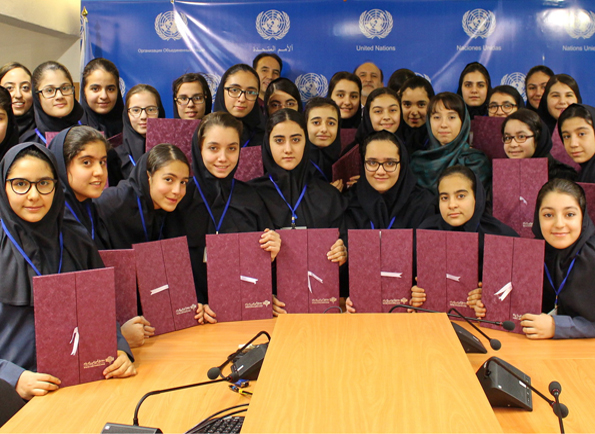
Rah-e-Roshd Girls Educational Complex in cooperation with the United Nations Information Centre (UNIC) in Tehran held a Model United Nations (MUN) conference on the subject of climate change with participation of some 31 primary and secondary school pupils at the UN office on 7 January 2016. The students were accompanied by a group of their teachers, AVA Diplomatic reports.
Ms. Ronak Amirsardari who used to be one of Rah-e-Roshd students and has gained some MUN experience in an international school in Italy led the group as the Chair of an Environment committee. The participants were representing 17 countries that produce the largest amount of CO2 emissions worldwide such as Iran as well as some countries threatened by climate change such as Tuvalu.
After making statements about the positions of their respective countries, the participants had a round of hot debates, negotiation and lobbying and finally succeeded to adopt an agreement to keep global warming “well below” 2 Celsius.
UNIC Reference Assistant Ms. Nazanin Ghaemmaghami made some remarks at the beginning of the MUN exercise. She read and underlined some important points that UN Secretary-General made in an op-ed entitled “A new era of opportunity” after United Nations Conference on Climate Change in Paris- November 2015.
At the same time she pointed out the importance of MUN for students at different levels. She said “participating in an MUN provides students with the opportunity to research an issue of global importance, while at the same time learning about another country’s geography, political structure and economic priorities. It also encourages discussion, debate, and consensus building as well as leadership skills.”
At the end of the programme, certificates and some gifts prepared by UNIC were given to the participants by the Headmaster of Rah-e-Roshd, UNIC Information Officer and Ms. Amirsardari.
Ms. Anahita Eslahpazir from Rah-e-Roshd, before presenting the certificates to the students said it was the first time that they had this initiative at their school and she has found it very useful because it teaches research and communication skills, increases the capacity of students to engage in problem solving, and inspires them to think about solutions. She added that they will have other MUNs with the cooperation of UNIC for other groups of girls and boys separately.
The students were very happy and satisfied from the simulation and expressed that they learnt a lot during the preparatory sessions and the main exercise. They added that it was a great experience for them to come to the UN office.