People’s Mobilization backbone of Iraqi forces
- Uncategorized
admin
- 0
- 13 minutes read
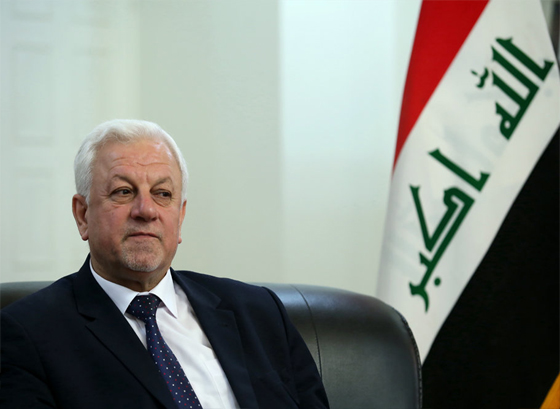
Iraqi ambassador has said his government will seek responses should Turkey refuse to pull its forces from Iraqi soil AVA Diplomatic reports.
Somayeh Khomarbaghi and Mohammad Mazhari of Mehr News International service had an interview with Iraqi ambassador to Tehran Mr. Rajih Sabir Aboudi al-Mousavi in his embassy office earlier in December. Mr. al-Mousavi believed that all foreign forces working with Iraqi government had been there with official request by Iraqi government and Turkey’s military trespassing of the Iraqi borders in the north was to be internationally condemned as violation of international borders. However, Mr. Ambassador believed that Turkey was still a Muslim country and a friend which should take the example of Iran whom al-Mousavi hailed for supporting Iraq through sending consulting officials in fight against terrorism.
The interview covered wide range of issues, inter alia, and the most important perhaps, Russian involvement in fight against ISIL both in Syria and formation of a four-sided ‘Intelligence Center’ along with Syria, Russsia and Iran:
How would you interpret Turkish forces coming to Mosul crossing the border, while Ankara has claimed that its forces only crossed the borders by a permission from Baghdad? Is Turkey honest in its claim?
As you know, the region is witnessing terrible and unfortunate days and countries experience disturbing events in security, political, and economic levels; however, we see a systematic failure and a realistic view of the situation by the international community; we are also a member to this community and are no exception to these influences. It is hapless that conflict has escalated between Iraq and Turkey who otherwise are Muslim neighbors.
When we speak of relations with Iran, a sense of euphoria infuses us, since Iranians had never trespass our borders, rather, they have sent military consultants to help Baghdad in fighting terrorism. We want to see Turkey also doing such things, taking the example of Iran, and have strong relations to Iran, Iraq, and the region at large. Our interests are closely interrelated by the virtue of being located in a single region. Hence, developments in our neighbors definitely spread to our country. 5 years after the dawn of war in Syria, now the international community have grappled with idea of forging a coalition against ISIL, Al-Qaeda and other terrorists, while Iran and Iraq had been warning since the beginning of the crisis that the danger would spread to all countries.
With Iraqi forces performing highly against ISIL in retaking larger parts of territories in Diyala, Tikrit, and Al-Anbar, Turkey has violated international laws in respecting international borders and trespassed Iraqi soil from the north, under mere absurd pretexts, while claiming that Baghdad agreed to the border crossing. However, their claim is baseless and Iraq will never tolerate ground forces from other countries violating its borders. We do not need new crisis. We condemn Turkey’s action and have sent the UN messages to mount pressure on Turkey to pull out of north of Iraq. The action is provocative and we hope Ankara will act wisely, otherwise we will use our right by international instruments.
Would you predict further escalation of conflict and military engagement by both sides and an incipient war?
We hope not. Iraqi government and nation would not welcome further escalation, since we are now focused on ISIL, a threat also for Turkey with whom the country claims to fight.
An ‘Intelligence Center,’ by Iran, Russia, Iraq, and Syria as members, has been established in Baghdad. Would the Center be extended the level of cooperation in the future, and would Baghdad file a request for Moscow to engage in fight against Iraqi side of the ISIL as well?
The Center acts as ‘operation chamber;’ with fruitful Russian involvement in Syrian setting, strategic changes had been introduced to the way the ISIL is fought back; we believe that some great powers actually back terrorists in Syria and Iraq, however, Russia positively changed the equation on the ground. The Center is crucial to bring coordination to four members. Iran’s position has been clear since beginning of the crisis in the region urging establishment of an honest international coalition to fight against terrorism. What Iran has opposed in last two years, has been a hypocritical coalition.
This is our right to call our friends to join fight against terrorism which is a threat to all countries, and hence we welcomed this Center.
What has been the role of People’s Mobilization or al-Hashd al-Shaabi as it is called, in fight against Takfirists, especially with recent fall of some of ISIL’s stronghold cities?
People’s Mobilization is the backbone of Iraqi forces and represents all Iraqi ethnic and religious groups such as Sunnis, Shias, Christians and Kurds. They are actually reserved forces, and classified as ‘security forces.’ Mobilization has now succeeded in reclaim larger parts of Iraqi soil from under the ISIL and other terrorist rule. Its role and function is therefore indispensable in Iraqi setting.
Some criticism are leveled against formation of Iraqi National Guard. Opponents believe the formation will weaken the classical army of Iraq and will precipitate Iraqi disintegration. What do you think of it?
Now, we see in TV channels broadcasting inside Iraq hold different opinions and positions. We may call these opinions well in line with Iraqi expediencies. Criticisms are natural part of this process. About the regional quotas in the National Guard, we believe that population is not the true and accurate measure to determine its quota of forces participating and being recruited in the National Guard framework. We believe also that the level of engagement in fights against ISIL does constitute a measure of the quota of cities. For example, Mosul is a large city with more population. In comparison, Basra, Samawah, and other cities have smaller number of population. But, people in these smaller cities have been unswerving in their loyal participation in the fight against terrorism, and in Mosul, people did not show that level of enthusiasm and interest. This is the point in the quota in recruitments. Despite all this, I believe Iraq is strong and will protect its national unity. This is rare across the world.
What has been Ayatollah Sistani’s role in fights against Takfirist terrorists and making the internal public forces and the army united?
If it were not for Ayatollah Sistani, Iraq would be disintegrated. I have also said, the Iranian success came only when the public followed their Leader Imam Khomeini (RA), and if they failed, no success would embrace the Revolution [of 1979]; there is a parallel of this for Iraq. Any nation who revered their religious charismatic leader, survived the hardships. As we said before, Iraq is the first in a sequence of trenches. If it falls, other trenches will definitely fall, and the region and the world as well will be engulfed by chaos. This is a significant issue, but the religious authority has played a great role in uniting public and restoring a sense of security to community.
Some analysts believe that a return to oil markets will give rise to a sort of Iran-Iraq rivalry. What sort of cooperation Iran and Iraq could engage in about unilateral cooperation or in OPEC framework?
Contrary to those analysts, I am ensured about Iran-Iraq cooperation rather than rivalry in international community. There is a full range of issues where both countries have similar positions. If any rivalry actually exists, is about restoring stability to volatile oil markets, and this is natural. A barrel of crude has gone a long way from $120 per barrel to $30 now, and this is a real threat to international financial system and to international security as well. Economy is closely related to security. Iraq’s relations with Iran would be a source of stability for global oil markets. We are also working in other oil and gas projects, worth of $10mn, which are important and have of global dimensions and consequences.
The same analysts would pose the statement that conflict and discord over oil prices will take dangerous turns. What do you think of this?
I believe that oil prices will not remain as such for long and in 2016, we will see rise in oil prices. Rivalry would damage all and this is not for the interests of all. Rivalry rises from political vested interests. Any country or party advocating the politics of discord would definitely review its approach to avoid the inevitable negative consequences. We hope to see improvement in oil prices soon. Conflict over oil prices would not benefit any side.
How Iraqi government would view Persian Gulf security order? Would it believe that this order would be realized with the US and UK present in the region?
Iraq is especially important for Persian Gulf countries, and all political equations would fall apart without Iraq. As long as Iraq fights as a proxy for these countries, no security will rule the region. The Islamic Republic of Iran has had a critical role in fighting ISIL. Our brothers in Persian Gulf should turn to dialogue with Iran, receiving with welcome Iran’s request to address the security and economic issues of the region in post-JCPOA era, otherwise the region will be stuck in a state of pandemonium and bloodshed. Great powers would not have concerns over our security and interests. This is well evidenced by the past history. The issues of the region could solely be solved by the countries in the region. This is what Iran has worked to establish as a fact in forgetting the past, especially Persian Gulf countries’ support for Saddam Hussein in the war with Iran. Great powers only seek to serve Zionist enemy.
Masoud Barzani, President of Iraqi Kurdistan Region, has recently paid visits to some countries in the region in an attempt to improve relations of Erbil with those countries. How would you interpret these visits? And would they serve Iraqi interests? How would you see the issue of Iraqi disintegration, would you consider as a serious project?
The Iraqi Constitution of 2003 posits territorial integrity and accordingly, Kurds, Arabs, Christians, Shias, Turkmen, Sunnis, and Yazidis have agreed to this important article. No party is eligible or in a position to deviate form this article. However, Barzani’s move is idiosyncratic, not reflecting the public demand by Kurds or Iraqis. Iraqi government authorities leveled critiques on the visits as well. According to Constitution, Iraq has parliament and Kurdistan has representative and minister in the parliament and the cabinet. About disintegration, no time in history did Iraq, Turkey, and Syria countenanced a Kurdish independent state in the region, and never will such a country come to existence. This is not in line with any strategic justification and rational thinking. International coalitions have favored unity and not divergence, and I believe disintegration is unlikely, however, requests for support have always been common. There are differences between Iraqi central government in Baghdad and Kurdistan region in the way issues are addressed. This issues should be negotiated and solved. Despite the discords, all are united against the common enemy which threats Iraq as a whole. The Iraqi nation rejects the idea as well; we have rejected disintegration since Sykes–Picot Agreement early 20th century. All parties and tribes in Iraq oppose disintegration and our friends help promote territorial integrity of Iraq.
Iraqi Kurdistan authorities have raised the issue of transiting gas to Turkey. What would you think of the act?
Such statements lacks seriousness. I believe our Turkish brothers would only buy gas from the Kurdistan region if the central government shows consent. This is to comply with international conventions. I believe dialogue would solve the gas issue with a delegation from Kurdistan to discuss the issue with Baghdad, and no serious concerns should be raised on this.