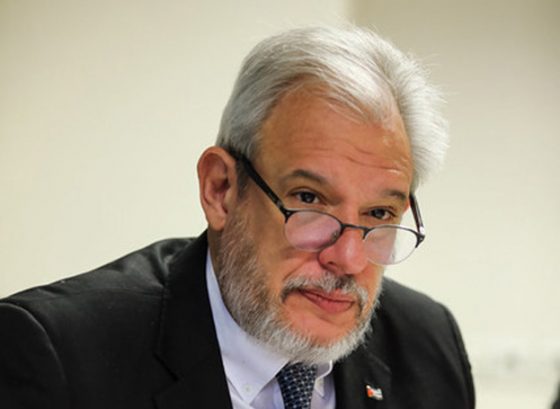
German envoy: Tehran-Berlin ties to be expanded in all fields after lifting sanctions
- Uncategorized
admin
- 0
- 9 minutes read
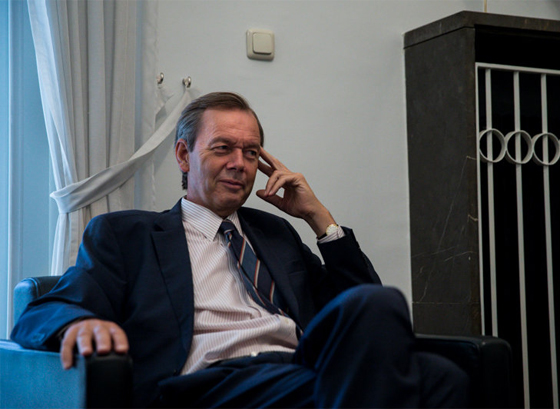
German Ambassador to Iran Michael Freiherr von Ungern-Sternberg said that Tehran-Berlin ties would not be limited only to economic transactions and the ties would be expanded in all fields after lifting sanctions imposed on Iran, AVA Diplomatic reports.
The full text of his interview with ISNA comes as follows:
Q: How do you evaluate the relationship between Iran and Germany?
A: First of all, Germany has always viewed Iran as a very important country in the region, dialogue and exchange between our countries have traditionally been intensive – don’t forget that we have a considerable Iranian community living in Germany. Some Iranians came to study, others came for professional reasons or simply married a German national. These countless family link shave greatly contributed to strengthening our relationship. When it comes to the economy, Germany has been a major business partner of this country for most of the last century. Of course in the last few years the sanctions have had their effect: Our current trade volume is relatively low but just 15 years ago Germany was undisputedly the economy exporting most into the Iranian market. And it is not just about selling goods: I think German companies understand perfectly well that technology transfer is an important part of our engagement in Iran, and so is job creation.
Secondly, education and science have brought our two countries closer to each other than ever before: Generations of Iranian students have completed their studies in Germany and we pride ourselves on the good reputation enjoyed by our universities here in Iran. Many successful careers have been the result of this German-Iranian cooperation.
Professor Majid Samie, the famous neurologist from Hanover is one outstanding example of a scientist who – through his numerous activities in both countries – has built more than one bridge between Germany and Iran.
Finally, let me say a few words about our cultural ties. Here in Tehran the many faces of our cooperation can easily be traced: Think of the renowned German Archaeological Institute (DIA) which has been fostering ties between researchers for decades. Or take a look the growing and vivid German School in Gholhak. We also have a German Language Institute (DSIT) providing high-quality language training for more than 5.000 students annually. Besides, it is one of the biggest institutes operated by the German government anywhere in the world. Fortunately, demand for German courses in Iran is huge, despite the fact that German is quite a complicated language to learn. Therefore, I am glad that we were able to raise the number of our students in the last two years.
Q: What are Germany’s priorities and plans for investments in Iran and how will cooperation improve between two sides after the JCPOA?
A: Since the agreement was reached in July, people in Iran have been eagerly awaiting the lifting of economic sanctions. They know about the great opportunities enhanced trade and investment offers to both sides involved.
It was the same spirit shown by our Vice-Chancellor Mr. Sigmar Gabriel when he paid his visit to Iran. Drawing on the rich heritage of decades of close relations he brought a high-ranking German business delegation to Tehran. Many more will follow his example in months to come. But it is important to note that the Vice Chancellor did not focus on economic issues exclusively. He also met with President Rohani, the Speaker of Parliament Larijani and Foreign Minister Zarif. So we are taking an approach which does not just cover the economy. We are addressing the whole spectrum.
Nowadays people often ask me on whether this or that big brand is considering a return to the Iranian market. This curiosity is understandable, but I also try to direct people’s attention to the less known names: Last year we had a big trade fair here with representatives of the international textile industry. 30 or 40 German companies displayed their textile machinery and I’ll be honest to you: I didn’t know any of them. The more surprised was I to find out that some of them were world leaders in some very specific areas! Small and medium-sized companies are the backbone of the German economy and I’m convinced they will find their place in Iran to our common advantage.
Q: How do you evaluate the increasing rate of violence in the Middle East? And what is your country`s attitude on this issue?
A: The momentous conflicts in the Middle East are obviously at the very centre of our attention: Germany is deeply concerned by what is happening in Syria, in Iraq and Yemen. We are witnessing a humanitarian catastrophe and the deaths of countless innocent civilians have to trouble all of us. However, we know that political stability is the only basis on which both a peaceful society and prosperity can be built. Accordingly, I think the international community carries a responsibility to cooperate in order to stabilize the situation in Syria and Iraq and to address the humanitarian needs of the refugees. In order to achieve this goal, all major regional states must be involved – our Foreign Minister made this point years ago. Moreover, we believe new security structures, adapted to the needs of the region, should be put in place.
Europe has enjoyed an unprecedented period of peace after World War II – and it is my conviction that the existence of the European Union has contributed a lot to this success. But obviously every part of the world has to find its own solutions.
Q: Germany’s behavior with regard to refugees has been admired by the international community. However, some commentators claimed that Germany has done so because of the negative population growth in Europe. How do you see this criticism?
A: The current refugee crisis is a huge humanitarian challenge. And as we know, ultimately it will only be solved by settling the conflicts which have led to its existence. However, there were numerous reports on European events in recent weeks which might have led some observers to draw somewhat mistaken conclusions: The refugee situation a month ago was quite exceptional and the extraordinary humanitarian measures taken by some countries do not reflect a turn in our general policy. First of all, European legislation on refugees, the so called “Dublin Convention” still applies. As a consequence, no one can choose which member state he or she wants to approach in order to request asylum. Instead, every person seeking refuge in the EU is legally bound to file his application for asylum in the first country through which he entered the Schengen zone – if he goes on and chooses another country, he will be sent back. That said, the German government is actively committed to reaching a fair burden-sharing agreement with all its EU partners. A comprehensive agreement on quotas among member states is urgently needed to ensure that “European solidarity” is not a mere catch phrase – and this clearly requires a common understanding on asylum standards within the EU.
Secondly, if somebody’s claim for political asylum is reviewed in Germany, it will be up to the authority in charge to determine whether the claim is founded or not. Past experience shows that most requests are eventually denied and the applicant is sent back to his country of origin. Therefore, the widespread claim that 800.000 newly arrived refugees will stay in Germany on a permanent basis is not accurate.
And this brings us back to your last question: Every fileof each refugee is reviewed individually, based on humanitarian law and the facts of the case. Demographical or economic considerations clearly don’t play a part in this process – if they did, there sure would be both cheaper and easier ways to achieve this aim. Quite on the contrary: We are convinced that the overwhelming majority of refugees want to return to their homeland once peace and stability have returned. The same is true for those refugees that found shelter in bordering countries like Lebanon, Jordan or Turkey. The German government actively prepares the refugee population in many host countries for this day – be it a Syrian refugee in Lebanon or a young Afghan in Iran – through numerous projects ranging from educational offers to health care and livelihood projects.
Q: What’s your idea about the U.S congress’ role in reviewing the JCPOA?
A: All governments involved have been working hard to reach this agreement. I am therefore pleased to see that no national approval procedure has so far prevented any of the provisions of the JCPOA from being implemented. The majority in the US-Congress has not stood in its way. Now we have to wait what happens in the Majles: Your parliament is also looking into the agreement and of course we hope for a speedy approval in Iran for the document to be implemented.