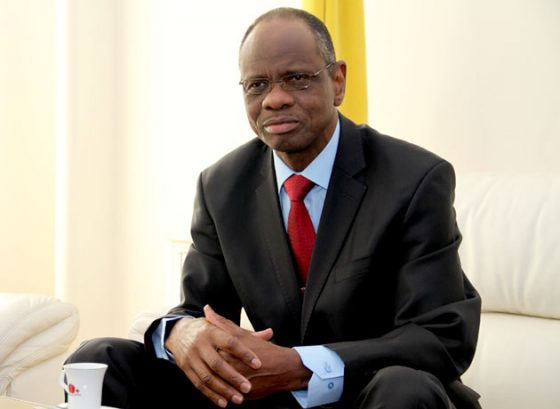
“The PUIC Does Not Interfere with Other Countries’ Domestic Affairs,” States Abu Agla.
- Diplomatic Dialogs Exclusive Interviews
admin
- 0
- 27 minutes read
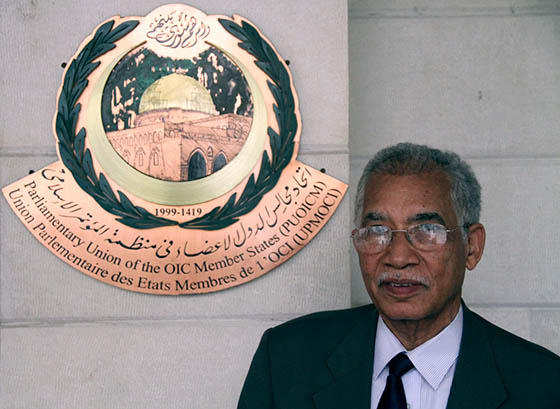
Following the first session of the PUIC chain meetings in November, 1996 in Tehran which hosted MPs from Iran, Indonesia, Libya, Sudan, Syria, Palestine, Pakistan and Bangladesh, the main formation of the PUIC, namely its core, was given birth to in in addition to a draft of articles dictating that Tehran be the headquarter thereof, later signed by other members. During that session in which the MPs of 29 countries had participated, the founding pillars of the union was voted for and the PUIC, owning more than 200 MPs as members and another 45 advisers from the OIC, was established in 1999 chaired by Ali Akbar Nategh Noori, Iran’s then Speaker of Majlis. In 10 years, another prominent conference was held by the Union in Abu Dhabi and the frameworks underwent a number of changes. Currently, the Director of the Cabinet of the PUIC is an outstanding Sudanese diplomat, with whom we held an interview to delve deeply into the performance of the Union over the years and personal accounts of Mr. Siddig Yousif Abu-Agla.
AVA Diplomatic’s Exclusive Interview with Mr. Siddig Yousif Abu-Agla, The Director of the Cabinet of the Secretary General of the Parliamentary Union of the OIC Member States
You have a long history in diplomacy. What did actually lead your steps towards politics in 1970?
I take that as a compliment, of course. I should say that as the Great Prophet of Islam, Mohammad – God’s Peace Be upon him – stated, “Seek knowledge from cradle to grave”, we should never stop learning and I feel I learn new things every day. The Holy Quran says” of knowledge it is only a little that is communicated to you,(omen).
You are right about my career. My diplomatic background includes my ambassadorship to five countries; a staff member of the Foreign Ministry; Chief of Staff of Sudan’s Minister of Foreign Affairs; and teaching diplomats at Khartoum’s Center for Diplomacy. Even after such a long stint of diplomatic service, I’m still very eager to exchange knowledge and experience with young diplomats while teaching them.
What did really convince you to become a diplomat?
I can’t really say it was all luck, but when I graduated from university, I found myself in a diplomatic environment, applied for a diplomatic career; and after a stiff competition and difficult selection processes involving one thousand applicants, only 20 were selected, including me. That’s how I began my career in the diplomatic service.
How old were you back then?
I think 24.
Did your father approve your future life as a diplomat?
The truth is my family was happy and supported me, because it was my own decision.
Your first mission was in Bangui, the capital of the Central African Republic. How do you evaluate that first step?
As you know, the Central African Republic is a neighboring state to Sudan, and so, there was a huge load of work to carry out, esp. with regard to the then problems in the south of Sudan. That was a chance for me to gain experience for my future life there. After that, I was transferred to Abu Dhabi, and as I had health problems during that period, I couldn’t have a long residence there. Later, I went to Lebanon as charge d’affaires where I bore witness to every incident regarding the civil war in that country. My service in Lebanon brought me the highest-ranking Lebanese medal.
You stayed in Beirut for 4 years. What memories do you have from then?
The Civil War in Lebanon was sparked off in April, 1975 and I arrived there in June, which means I only missed one month of the war. I served for one full year there as charge d’affaires. Sudan, under the flag of the Arab League, played a great role in the development of events in Lebanon, in order to bring back peace as soon as possible.
That was a great experience for me, for I had to make crucial decisions under war circumstances, which, of course, gave me a positive role and I could see myself contributing to alleviating the suffering of our Lebanese brothers. Back then, Lebanon was all involved in war, so I found myself almost one step away from death many times and was very lucky to stay alive.
The Hollywood movie “Spy Game” was made about the civil war in Lebanon. It shows that the US played a role in the developments of Lebanon on its own soil. Could you verify such a claim based on your actual personal observations?
Back then, it wasn’t much easy task to figure out such a scheme, for the country was entirely afflicted with a war. But what was substantially recognizable was the fact that the Lebanese families were going on with their daily lives and appreciated our presence and efforts for putting an end to this war to the extent that the then President of Lebanon called me to a meeting, and awarded me the highest-ranking medal of his country in recognition of the whole efforts.
Sudan also granted me the highest-ranking medal of social services in recognition the effort.
I should point out that Lebanon is a civilized country, because even at the time of war, its people were very well behaved and sensible.
You were 30 years old when you received those medals. How did that make you feel to be that young and to receive those honors?
I felt gratified, in fact. The fact that Presidents gave me those medals is a really pleasant feeling and a primary motivation to push me toward further progress. I should stress that those medals are not trivial symbols which are routinely given to anyone, but they are tokens of appreciation granted as a result of actual accomplishments.
Were you married then?
No, I wasn’t. Because of war conditions, the families of our diplomats had returned to Sudan. So you see there was no chance I could be married. There even were times when we had to lie on the floor to stay safe from bombardments. I’m glad, though, that I could go through all that, since it made me become what I am now. Despite all the responsibilities I was tasked with during the war, I continued my M.A. studies at the American University of Beirut.
What did you study?
Administration. At that time, I was totally dedicated to work and education. However, if go out carelessly, there was a solid chance of getting killed. Once, armed individuals blocked my way and took away my car.
And after a hectic period in Lebanon, you went to a peaceful place, Canada.
In fact, after Lebanon, I returned to Khartoum for 2 years and worked at the office of the Foreign Minister. Afterwards, I went to Canada and after that, Algeria.
There were armed conflicts in Algeria. Did you happen to witness those too?
You mean to say the struggles for independence in the 1950’s. As you may know, the Algerian people have offered a million martyrs to obtain their independence. Therefore, we can consider Algerians to be a fine example of those who can teach others lessons of freedom. Although I spent a relatively short time there, I can clearly recall memories of Algeria, because my second daughter was born in that country.
Interesting! When did you get chance to tie the matrimonial knots?
In 1980, when I returned to Khartoum and before my departure to Canada, I got married. My first daughter was born in Canada. It is interesting to know that she traveled to Iran last week to visit me, and it is worth mentioning that all my children love Iran very much.
Algeria’s ambassador in Iran, Mr. Sofiane Mimouni lost his father in those Algerian struggles. Do you have any particular memories of that specific period in Algeria?
Mr. Mimouni and I were simultaneously the ambassadors of our respective countries in Indonesia. Anyway, I should underline that I have a whole lot of memories from my time in Algeria, but the important thing I want to point to is that Algeria is a significant country, a pioneer and a bulwark of freedom movements.
Where did you go after Algeria?
I returned to Khartoum, and that’s an important period for me, for I was posted to the Foreign Minister’s office.
So you were close with Sudan’s FM, right?
That was so, but I was too young for such a position.
Who was the then Foreign Minister of Sudan?
In fact, there were two ministers. My time began at the end of Mr. Mobarak’s stint and the beginning of Mr. Osman’s.
After this period, you departed for London. What was your top priority there?
I went to London between 1985 and 1990. Sudan’s Embassy in London is one of its largest embassies in the whole world. Back then, there were various categories of Sudanese civilians like students in London. As a matter of fact, Sudan was a colony of the UK, and as a result, many Sudanese live Britain. The Sudanese community in London is well-educated and experienced.
My service in London was my most significant administrative experience, for I was the Minister Plenipotentiary. Besides, there was a lot of work to do such as the relations between Sudan and the UK and the state of Sudanese civilians there. As a result, I was mostly involved in administrative aspects and running the embassy.
When you left London, between 1990 and 1992, you became a member of the Technical Committee for Organizing the Work of Voluntary Organizations in the Sudan. What was that committee all about?
When I returned to Sudan, I resumed my service at the Ministry of Foreign Affairs. The Ministry transferred me to the Committee for Refugees’ Affairs, and that was where I applied for the Management of Organizing the Affairs of International Voluntary Organizations for Refugees’ Affairs. All of those organizations, Sudanese and others, were voluntary and non-governmental.
And after 2 years, you were appointed as Ambassador of Sudan to Morocco and received another medal of appreciation during your five years there.
Let me tell you one thing. My tenure in Morocco took a little bit more than usual. Morocco is a developed country and then had a prudent King ruling it whose strong management and policies were bringing progress to the country.
He was famous for addressing out the problems of the Arab world and that was why the relations between Sudan and Morocco were vast and reached an agreeable level. I believe the medal I was granted with was in fact a reflection of what I had done there. I still have lots of pleasant memories from Morocco.
What positions did you work in after you returned from Morocco?
I returned to Sudan and worked as the Director of the Department of Borders and Aliens (1997-1998), Director of Department of OIC and Religious Affairs (1998-1999), and Director – General, Department of Planning, Research and IT (2000-2001). Afterwards, I went to Indonesia as Sudan’s Ambassador.
You were also a member of the Central Committee of the Sudanese Red Crescent.
Yes, I was. I also was a member of many other voluntary organizations, for I was the Director of the Department of International Organizations. As a result of that, I was in touch with a large number of those organizations, and despite my consistent presence in office, I was a member of their teams. The Sudanese Red Crescent is very much active in terms of philanthropic contributions and measures.
In 1998, you went to Vienna, Austria. Why?
I went there on a fellowship in Peace-making and Preventive Diplomacy/Negotiation, from UN Institute for Training and Research, Vienna,(UNITR).
After years of work in Europe and the Americas, you were transferred to South-East Asia. That must have been quite a new environment for you.
I went to Indonesia as Ambassador and was Non-Resident Ambassador in Vietnam, Australia and Singapore. These countries had substantially different atmospheres. As you can see in my background, most of my activities had been carried out in the West, in cities like London, Ottawa, and so on. But I was suddenly transferred to the atmosphere of South-East Asia. However, I’m very happy for the opportunity I was given to experience a brand new environment in Indonesia and Iran.
Does Islam in Indonesia differ from that in Africa?
Islam is always one. It’s the people who are different. For instance, another Sudanese and I have a different interpretation of Islamic precepts, whereas we both have been raised under similar circumstances. Islam, on the other hand, always remains one and the difference lies with people. Islam is the religion of peace, tolerance, cooperation and forgiveness.
When did you come to Tehran as the Director of the Cabinet of the Secretary General of the Parliamentary Union of the OIC Member States? How long will it last?
I came here in August, 2008 and I will continue my work as long as God wishes me to. Whenever the Secretary General of the Union is changed, my time may come to an end, too.
How are the individuals selected for senior positions at the Union?
Whenever necessary, the Union will advertise these posts and the applicants can register their names. After evaluating their backgrounds and conducting interviews with them, considering their geographical proportions, the most eligible individuals are chosen.
Could you elaborate on the Parliamentary Union of the OIC Member States and your role therein?
As you know, I am in Iran as Director of the Cabinet of the PUIC Secretary General, Professor KILIC.
The Parliamentary Union of the OIC Member States (PUIC) is composed of the parliaments of the Organization of Islamic Cooperation (OIC. It was established in Iran on 17 June 1999, with its head office situated in Tehran.
As the Director of the Cabinet, what are your tasks exactly and what powers and volitions do you enjoy?
If you visit our organizational chart on our website, you can see that after the Secretary-General and his assistant, my position comes third. In fact, we are doing a group work here and I cannot really state the task that I do exclusively. We all work under the guidance and supervision of the respectable Secretary-General of the Union.
What is the most significant agenda you are currently involved in?
If you look at our statute, you’ll see that the Union is composed of different organs, first of which relates to the holding of conferences and preparing annual meetings between the member Speakers of parliaments, second of which is a General Committee whose members are two representatives of every parliament who meet annually and the third is the Executive Committee such as economic, political and women committees which are active in their own specific areas. The fourth organ is the Secretariat which is located in Tehran. There are also two other organs. One of them is the Conference for Muslim Women MPs, which was established 3 years ago, and the other is Palestine’s Committee, which has recently started operating, because, as you may be aware, the final goal of the OIC is Al-Quds.
Does the Committee on Palestine has any plans to reconstruct that country?
Through the Palestinian representatives, we are familiarized with developments inside Palestine. The PUIC adopts resolutions in favor of Palestine and the struggle of its people against Zionist enemy.
Do you financially support them?
The PUIC facilitates delivery of assistance to occupied Palestine. There is also Al-Quds Fund managed by the OIC.
How many countries have the membership of the Union?
Currently, 53.
Is the agenda of the Union annually edited?
The objectives of the Union are always the same, and if you go to our website and look into our statute, you can see that all member countries are striving to make the objectives which benefit the Islamic community come true, of course, in coordination with each other.
Does the Union have further cooperation and interaction with other international organizations such as the OIC?
Certainly. We cooperative with the OIC and for your readers information, I must tell you that among other parliamentary unions in the world, we stand second to the IPU in terms of the number of our members, and our members come from Asia, Africa, Europe and Latin America. You can see that we have a global coverage. We even address affairs and problems of Muslim minorities in non-Islamic states.
How do you support the Muslim minorities who live in non-Islamic states?
When we receive reports of a problem related to Muslim minorities, we will announce our cooperation and contribution, and if they want us to, we can help them in any possible way. Our help, however, should not contradict the domestic laws of those countries and are to only be in the direction of humanitarian help, and not political interference.
There is a thin border between humanity and politics in this area. In Myanmar, for instance, we witness the massacre of Muslims. How can you pursue all those affairs without taking politics into account?
You are quite right. But you should pay attention to the fact that we have no physical presence in those countries, for they are not our members and so, we direct our contributions and support toward humanitarian aspects. This Union is consisted of MPs and if any interference is bound to take place, it should be carried out by governments.
As an example, what have you done about the massacre of Muslims in Myanmar?
Not only about Myanmar, but whenever we see Muslims suffering, we offer them our assistance.
What have you done for Muslims in Ingushetia and Uyghur?
I really don’t tend to turn this interview into a political one, but I must say we have more extensive agendas on the role of our members and I have only referred to a small aspect of it which includes Muslim minorities in non-Islamic states. You should know that we don’t interfere with any issue which is of a political nature.
There is a permanent Committee for Human Rights, Women and Family in the Union. Does this committee have any plan to improve the rights of women in the member countries’ parliaments?
We always request that the rights of women be paid utmost importance to, and even invite women MPs to work in the areas related to the interests of their community. In fact, this committee has been recommended to start operating by the women MPs themselves and on the sidelines of main conferences and within the frameworks of the related subjects, they hold their own conferences and that is a particularly special measure regarding the issues of women, children and families.
Do you know which subjects are in the agenda of the Foreign Relation Committee of the Union?
What stands prior for this committee is the status of the member countries and any suggestion or question in this regard is to be assessed and analyzed by its members at their sessions and the decisions to be made in the direction shall which benefit the Muslim community. We are constantly trying to maintain brotherhood among Muslims. It needs to be mentioned that some of the problems and issues which are of a global dimension will be discussed and decided upon.
As a Muslim and someone who has a high rank in the Union, please explain to us how some extremist groups such as the ISIL can have such a harsh and fierce interpretation of Islam.
Islam is a unified body. Islam is a clear and transparent religion just as the Quran says, “We sent upon you a Prophet of kindness.”
Violence and extremism have nothing to do with Islam, country or race. The biggest and most dangerous terrorist attacks come from Israel which is not Muslim. As a point of fact, many of those groups who are killing people in Asia and Europe are not even Muslim.
That will be a grave mistake to think terrorism is inspired by Muslims. That’s just how they label Islam and Muslims. I don’t advocate terrorism, of course, and condemn every act of violence.
Do you believe in the presumption that some western countries are trying to instigate conflicts and unrest among Muslims?
Please put Islam aside from every present problem and dispute in the world. If you look carefully, every colonial state is trying to expand or revive their colonialism in Africa and other places. They are seeking their own interests and we, as Muslims, should put our interests above all, and tell our friends from our foes.
You have a long history in the realization of peace-making measures. Did you try to have any peace-seeking activities at the time of the Darfur crisis?
As I underlined earlier, we don’t have any interference with the conflicts inside a country, and I’m not talking to you as Sudan’s ambassador. I’m conversing with you as the Director of the Cabinet of the Parliamentary Union of the OIC Member States. We don’t even step into the domestic disputes of our own countries. But if a country asks for our help, we analyze it, for we always support peace.
I appreciate the time you ascribed to doing this interview with us.
I, too, thank you for your efforts to conduct this interview.