A Look at Tehran-Moscow Ties with Russia’s Consul General in Rasht
- Diplomatic Dialogs Exclusive Interviews
admin
- 0
- 23 minutes read
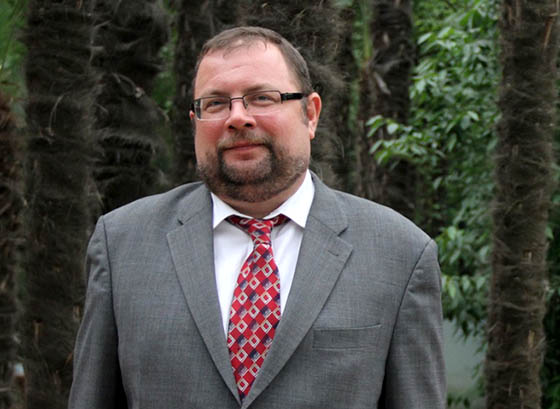
Russia’s Consulate in Rasht covers Iran’s northern and northwestern provinces of Gilan, Mazandaran, Golestan, Ardebil and Eastern Azerbaijan. It hosts Iranian citizens who seek to apply for commercial and tourist visas. Only months after the 1979 Revolution, this department was shut and later, on March 6, 2006, was reopened after 27 years but promoted to Consulate General. Vladimir Ivanovic Ivanikov was Russia’s first Consul General in Rasht after the Revolution whose current successor is Maxim Baranov.
AVA Diplomatic’s Exclusive Interview with Maxim Baranov, Russia’s Consul General in Rasht
How old are you Mr. Baranov? What did you study?
I’m 48 years old and it has been 3 years now since I began serving as the Russian Consul General in Rasht. I graduated from the School of Asian and African Countries of the State University of Moscow. My particular major concerned the economies of Iran, Afghanistan and other Middle Eastern countries. After graduation, I already had experienced working as the trade representative of the Soviet Union in Afghanistan.
When did you first begin your studies and graduate?
I started in 1983 and finished in 1989.
While you were pursuing your studies, Iran was spending days of revolution. Had you been trying to stay informed about those developments?
Yes. It was four years after the revolution took place in Iran. That was an interesting occurrence, anyway, not to forget that in Russia, Persian literature has its significant place and almost everyone knows the poems of Khayyam and Hafiz. I should tell you, however, that my major was economics and I had no specialty in Farsi. So, after graduation, I was accepted to work as a trade representative officer in coordination with the Soviet Union’s Foreign Ministry and served in Afghanistan for quite some time. Four years later, I was once again dispatched to work as the Commercial Delegate of the Russian Federation in the Republic of Afghanistan, and after that, I continued my time as a senior specialist of the Ministry of Foreign Relations in the area of Iran’s and Afghanistan’s affairs, involved in the Joint Commission for Economic and Commercial Cooperation between Iran and Russia.
In 1992, I worked as Iran Desk Clerk and was appointed the first secretary and political consultant at the Embassy of the Russian Federation in Tehran in 2004 and once I returned, I was in charge the Desk of Iran at the Ministry of Foreign Relations of the Russian Federation between 2005 and 2011. In that position of mine, I was engaged in extending political, commercial, economic, technical, military and cultural ties between the two countries and from there, I have been serving as the Consul General of the Russian Federation in Rasht.
Given your background, didn’t you expect a higher ranking than Russia’s Consul General in Rasht?
That was also possible, but you should note that we act in accordance with our own organizational codes. To accept this position was such an honor for me, anyway. The Russian Federation has now two Consulates in Rasht and Isfahan. Iran, too, has two Consulates in Astrakhan and Kazan, the Capital of the Autonomous Republic of Tatarstan. That is why the relations between the northern regions of Iran and the southern regions of Russia are not restricted to a simple visa issuance, and in every field, because of rich potentials, lots of activities are being carried out.
The Russian Consulate in Rasht was active before the 1979 Revolution. Why did it stop operating until 2006 then?
That’s related to the decisions made after the Revolution and I don’t know the reason. Then, Russia owned two consulates in Isfahan and Rasht and in return, Iran had its own in Saint Petersburg and Baku. Later, both countries decided to shut their consulates in Rasht and Saint Petersburg.
After the demise of the Soviet Union, Russia’s Consulate in Isfahan remained unchanged and Iran’s in Baku turned into its Embassy in the Republic of Azerbaijan.
That’s how the Russian side had a consulate in Iran, but the Iranian side had none on the Russian soil. Through negotiations conducted between the two sides and as suggested by Iran and Mr. Mehdi Safari, Iran’s then ambassador in Russia, current in Beijing and a prominent diplomat, it was decided 12 years ago that Iran opens its consulate in Astrakhan.
I should add that as Iran’s first consul general in Astrakhan, Mr. Akhoundzadeh played a pivotal role in consolidating the ties between the two countries, esp. in the areas within his jurisdiction. In addition to his efforts for having Gilan and Astrakhan sign contracts, he used to teach Farsi at the State University of Astrakhan.
After the second conference of the Caspian Sea Heads of State which was parallel to the talks with the Iranian side, an agreement was reached dictating that Russia was about to open its consulate in Rasht permitting Iran to establish its own in Kazan which eventually came into realization in 2006.
Almost 4-5 years had passed since the Islamic Revolution when you were admitted to the university and began your studies about Iran. Back then, the Tudeh Party of Iran was accused of spying for the Soviet Union. Did you know the members?
In that regard, all I can say is that one of our Farsi instructors at the university, who was also a member of the Persian Language Faculty, was a Tudeh member. He was nearly 70 then.
Didn’t he ever tell you memories about Iran?
Our classes with him were held once a week and we used to study various works including some of Sadegh Hedayat’s. When we talk about the past, we should discuss different aspects of the ties between two countries, not only their ideologies. National interests should be paid more attention to, however, for they matter more than ideological issues. As you know, after the demise of the Soviet Union, Iran and Russia have never gone through hardships in their relations.
You visited Iran for the first time 20 years ago. I wondered to know how different your initial image of Iran was than what you actually ran into.
Interesting question. It’s not fair to say Iranians were afraid of foreigners back then, but they used to stay away from them. Yet now, you can easily discuss different things and exchange viewpoints with them.
Another subject I want to speak of is the relations between Iran and the Russian Federation. For example, if you ask Iranians about Russia, they remember the name of Vladimir Putin as much as they recall Russia’s cooperation in nuclear, economic and Caspian Sea areas.
Let me give you another example. In Astrakhan, now, there are more than 160 Iranian companies. The contacts between the two countries have been multiplied compared to that time. We are now engaged in developing bilateral ties and I should say both Russia and Iran are after a multidimensional world rather than a one-dimensional one.
Does Russia view Iran as its strategic partner?
We don’t use the term “strategic” or “non-strategic”. I can tell you that we have extensive and stable collaborations in strategic areas and that’s what matters most.
Before the sanctions were fully intensified against Iran, Iran signed an agreement with Russia to buy missile defense systems, but later and under the pressures from the West, Russia didn’t deliver the S-300 Defense Systems. You see that now Russia is being embargoed by the West due to the Ukrainian crisis. In fact, a strategic partner implies unconditional support in the time of hardships which finally prevents the creation of a one-dimensional world.
I’m not at full liberty to comment on such notes as a Consul General. You can ask me about economy or tourism. Needless to say that the first contact between Mr. Putin and Mr. Rouhani was made 13 years ago, when Mr. Rouhani came to Russia as the Chief of Iran’s Security Council and held negotiations with him. The other thing is that after one year since the Presidential election, both Presidents have had meetings and recently some phone calls.
So your take is that after President Rouhani won the terms, the relations have gone more positive and brighter horizons can be depicted, right?
Both governments have emphasized in their meetings the development of ties in political, economic, commercial, technical and military areas.
As a point of fact, you are the consul general of the five provinces of Gilan, Mazandaran, Golestan, Ardebil and Eastern Azerbaijan. What are your plans for all these areas?
At the time of the Soviet Union, the ties with Iran’s northern regions were not this strong. Currently, the relations between Astrakhan and Gilan are ongoing on levels of commerce, economy, education and culture.
In this regard, I can offer you some other examples. As you may know, Mr. Zhilkin, the Governor of the Astrakhan Oblast, came to Iran and held serious negotiations with his counterparts in Gilan and Mazandaran. The interesting thing I want to refer to is that that was the first contact between the two governors in 20 years. Back then, Mr. Zhilkin was the Deputy Governor of Astrakhan and Mr. Najafi, who is currently Gilan’s governor, was Gilan’s Deputy Governor, which means they both know each other and that’s an important fact.
In terms of expanding relations between Astrakhan and other provinces, I have to say that at that very meeting, 4 MOUs were signed in Gilan and another 5 in Mazandaran.
How much can the cultural commonalities between Iran and Russia lead to strengthening their ties?
Thanks for asking this question. I believe that to answer this question in full exceeds the scope of a full book. I agree with you that between Iran, Russia and their nations, there are cultural commonalities which enable them to have a fine understanding of their cultural heritage. Besides, the two countries own significant shares in the world’s cultural treasure trove. As a point of fact, the two countries share a lot of common grounds in terms of attracting and understanding cultural achievements and establishing precious humanitarian values through classic literature and poetry. So, no wonder people traditionally compare Pushkin and Hafiz considering their role in the development of Russian and Iranian literature and global culture.
Furthermore, we should point to the widespread interests in Russia toward the contemporary cinema of Iran and the other way around. In Russia, people are conventionally interested in learning Persian. Iranians, too, are very much inclined to learn Russian, which is unimaginable without the mutual enrichment of cultures. I must underline that in the form of a mutual agreement between the universities of Astrakhan and Gilan, there has been cooperation for teaching Russian and Farsi.
What is the priority of the Russian Federation for investing in the five provinces under your supervision?
The relations between the provinces of Gilan, Mazandaran, Astrakhan and the Republic of Dagestan are pretty much wide which relate to trade, export and import, for a large proportion of Russia’s export and Iran’s import are conducted via ports near the Caspian Sea in the north of Iran and south of Russia. That’s why the project of North-South Transportation Corridor is of utmost importance.
80% of Astrakhan’s trade is related to Gilan and Mazandaran. Astrakhan’s relations are not limited to trade and economy and very much extend in the realms of education, culture and even tourism.
About other provinces, I can say that Eastern Azerbaijan has Tabriz’s refinery and a number of car manufacturing companies having special relations with the Republic of Tatarstan. In Tabriz, there is a car assembling company for Russian trucks named Kamaz whose spare parts are all imported from Tatarstan. Golestan, too, has its own ties with Astrakhan. Ardebil has also signed an MOU with Moscow.
What facilities are there in Moscow? I mean the province.
Around 12 million people live in the city of Moscow and another 6 million out in the suburbs. That is how we maintain our extensive connections with these provinces and our top priority is to extend, develop and flourish the economic and commercial ties.
Unfortunately, I have to say that the existing potentials are not being put into good use and one of my duties is to help make up for them.
During Mr. Zhilkin’s visit to Anzali and Amir Abad Free Zones, it was decided that a committee consisted of economic activists and merchants be sent there to make better use of the existing economic potentials.
Did you know that over 75% of the ships entering the Anzali Port belong to Russia?
That’s actually possible. I don’t know the number of them, but I know that for a fact that over 50% of the cargo brought to Anzali’s port comes from Russia.
According to the statistics the head of Anzali’s PMO has provided, many of the ships entering Anzali’s port are Russian.
As Russia’s Consul General, I have to say the Iran’s Government doesn’t own an exclusive right over the shipping and there are some other shipping companies active in the north of Iran, not to forget that many of those ships employ Russian sailors, officers and captains.
Given the extensive activities of Russian ships there, doesn’t the Russian Federation have any plans to hammer out some of the port’s problems such as dredging?
Of course. I don’t intend to point to technical issues, but I must say that a committee came here in which the Deputy Chief of Astrakhan and Mr. Sergey Gorzovanoski, Astrakhan’s Minister of Transportation, met with the PMO Chiefs of Gilan and Mazandaran. The meeting was aimed at enhancing cooperation.
So we should hope to see some dredging with the help of Russia soon.
That relies on the results of the talks, but I know it has been discussed.
Another subject is the presence of Astrakhan’s investors in Iran. Are they bound to visit any of these 5 provinces?
Along with the committee accompanying Mr. Zhilkin, there were 40 Russian investors who negotiated in different areas of shipping, transportation, export and import and agriculture, and signed a number of MOUs. Iran is one of the biggest importers of Russian wheat and barley and Russia imports building material such as cement and concrete. Iran’s share in Astrakhan’s foreign trade is nearly 40%.
How many Russians are living in these provinces? I heard many do. Is that right?
Before the Revolution, a number of Russians were living in Iran, some of whom returned to Russia, died or stayed here. There are a few Russian women, for example, who are married to Iranian men and I help them keep the Russian language fresh. It might interest you to know that the local language of Gilan has some Russian words in it. For instance, in Rasht, they call tomato “pamador”, or boat “ledka”.
In the past, the Muslims of Dagestan used to go on pilgrimage through Iran. Is that still so?
In the past, pilgrims of Dagestan used to go to the Republic of Azerbaijan, Iran, Turkey, Syria, Jordan and then Saudi Arabia. In this regard, there is an institution in Russia named the Pilgrimage Council which conducts consultations for Russian Muslims in Dagestan and Tatarstan to send them on pilgrimage on flights.
How is the Russian Federation’s status in the area of manufacturing cars?
In the financial crisis of 2008, both countries were exporting cars to one another. Iran nearly exported 45 to 60 thousand Peugeot 206s and 10 thousand Samands. There was a Russian manufacturer which was shut down because of the crisis. Now, however, there are ongoing talks over the export of Russian minibuses named Gazel. These minibuses are better that Chinese vans you currently use. There has been an agreement for car suspension and handling systems with Khodro Diesel, close to Tehran. Iran has also been offered a number of Jeeps and Ladas whose shareholders include Renault.
On an average, how many visas are annually issued for Iranian citizens who wish to visit Russia?
The number of visas for tourism and business purposes is big, but unfortunately, I should note that the number of Russians who come to Iran on tours is ten times lower than that of Iranians.
Your cultural heritage such as Persepolis and Isfahan do interest Russian tourists. Also, a large number of Russians travel to Tehran in winter for skiing up in the mountains in the north of Tehran and so on.
In tourism, the committee headed by Mr. Zhilkin signed 2 agreements with Gilan and Mazandaran which construed that Astrakhan proposed a plan, named “Oriental Astrakhan”, for its cultural heritage is great and many Iranians live there.
The Iranian side, too, prepared a plan, but there was one problem, which is the lack of a direct flight between Astrakhan and Rasht or Sari. As I pointed out earlier, Aseman Airlines has negotiated with Astrakhan’s Governor to resume this flight, yet it should prove economical and reasonable.
You haven’t told me yet how many visas are annually issued.
In 2013, the Russian Consulate in Rasht issued more than 3500 visas. Not to forget that the Consulate branch of the Embassy in Tehran and Russia’s Consulate in Isfahan have issued some as well.
Then it means the number of applicants for visiting Russia isn’t considerable as much. Do you know what percentage of them are tourists?
Yes, 80%. I agree with you there that the tourism potentials in both Iran and Russia have not been efficiently made the most of. While compared to the 3 or 4 million Iranians who travel to Turkey, the number of Iranian visitors to Russia is very ordinary.
You are one of the Russian diplomats who is able to speak Farsi. You do know that a command of Farsi for Russian diplomats and vice versa can pretty much contribute to the development of cultural, economic and even political relations between the two countries.
I believe without having the knowledge of language, a diplomat cannot properly serve, esp. in Iran where various bilateral ties are to be resolved. That’s a fact that many Russian diplomats in Iran and the staff of the central section of the Ministry of Foreign Affaris are engaged in Iran’s affairs, know the language, and are working to obtain a better grasp of the knowledge.
In this regard, it should be noted that over the recent years, teaching Farsi has really branched out geographically all through the universities of Russia.
Not only in Moscow and Saint Petersburg where Farsi is traditionally taught at Farsi language centers, but also in cities of Astrakhan, Kazan, Novosibirsk and other Russian regions the language is developing every day. In this respect, I should refer to the active role of the Cultural Section of Iran’s Embassy in Russia.
Iran’s current ambassador to Russia, Mr. Mehdi Sanaei chaired this center in 2000 and has a fine command of Russian, too. Moreover, Iran’s first consul, Mr. Akhoundzadeh taught Farsi in 2000 at the University of Astrakhan. Another thing to point to is the transfer of students and professors between the universities of Astrakhan and Gilan on different educational levels.