Preparedness and coordination saves Lives
- Uncategorized
admin
- 0
- 4 minutes read
Buildings crumbled into a pile of rubble. Unimaginable loss of life. Rations. People scrambling for food and water. Families torn apart. Communication lines down. Darkness approaching with no prospect of electricity. Supplies running out. Hospitals working overtime at full capacity. Impassable roads. Makeshift tents everywhere. Sadness. Tears, AVA Diplomatic reports.
This is the human face of a devastating natural disaster.
Iran is one of the most disaster-prone countries in the world with floods, drought and earthquakes being the most frequent tragedies to strike.
The strengthening of disaster management capacities in Iran has therefore features high on the agenda of the United Nations in its development cooperation with Iran.
Drawing upon on a wealth of knowledge and experience, the UN works closely with governmental and civil society partners to identify and strengthen national capacities in the management and implementation of both disaster reduction and preparedness and early recovery programmes.
For this reason, the UN’s Office for the Coordination of Humanitarian Affairs (OCHA) office in Iran, is currently holding a three-day workshop on “Introduction of International Search and Rescue Advisory Group (INSARAG) and the United Nations Disaster Assessment and Coordination (UNDAC) systems in Disaster Management.”
In the opening of the workshop Mr. Gary Lewis, the United Nations Resident Coordinator, said: “the issue of disaster preparedness and response is a major element in our cooperation with Iran for the past several years. And just last week, together with the government of the Islamic Republic of Iran we came up with a new cooperation framework which – yet again – emphasized the need for the international community and the UN to support Iran in the area of disaster preparedness and response.”
The three day workshop was held at the United Nations Common Premises in Tehran
In his concluding remarks Mr. Lewis drew attention to new threats related to the environment: “Beside the natural disasters like floods and earthquakes one of my fears is the impact that we – ourselves – are having on the natural environment and climate change. I am of course referring to particularly two threats: scarcity of water and dust and sand storms. These are things that will represent clear and present dangers to the population. We need to take account of these to be able to protect our citizens form threats.”
Mr. Behnam Saeedi, Deputy of National Disaster Management Organization (NDMO), also spoke in the opening of this workshop. In his remarks he said: “Education is a key to prevent major accidents from happening and finding effective solutions. This trainings must be updated and practical to prevent people from harm.”
Mr. Saeedi continued: “The Iranians have not forgotten the memory of the Bam or Roudbar earthquake. Most of the cities in Iran are prone to disasters so these kind of workshops will help us to be prepared and ready in case something happens.”
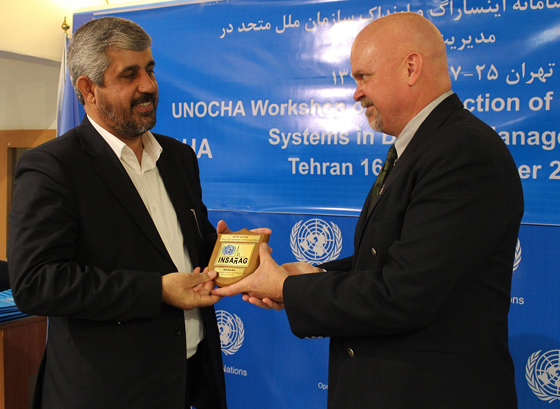
At the end of the opening session Mr. Gary Lewis – on behalf of the United Nations – presented an INSARAG Plaque to Mr. Saeedi to welcome Iran’s partnership into INSARAG system.