“Iran Can Turn into a Strategic Partner for Ghana,” Assures Ghana’s Ambassador.
- Diplomatic Dialogs Exclusive Interviews
admin
- 0
- 14 minutes read
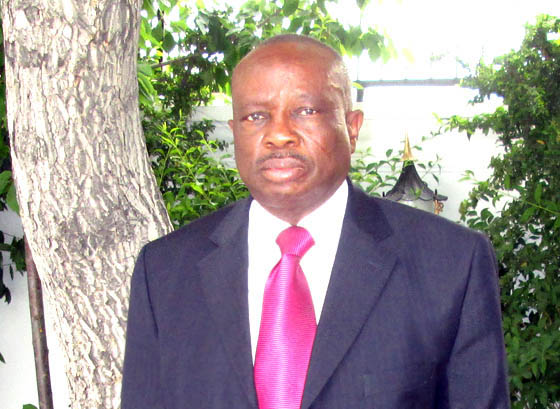
In the 15th century, Ghana embarked on its trade with Portugal and later, in 1847, it became a protectorate to the United Kingdom, named afterwards “Gold Coast”. However, once, in 1957, the country regained its independence, it chose “Ghana” for a name. Ghana shares border with Côte d’Ivoire in the west, Burkina Faso in the north, Togo in the south, and the Gulf of Guinea in the east. To gain access to further familiarity with Ghana’s strategic location in Africa and its economic and political ties with Iran, we held an interview with Alhaji Bawah Gilbert Ayembillah, Ghana’s Ambassador to Tehran.
AVA Diplomatic’s Exclusive Interview with Ghana’s Ambassador to Tehran, Mr. Alhaji Bawah Gilbert Ayembillah
What position does Ghana occupy in terms of its geostrategic aspects in West Africa (Mr. Ambassador can you briefly tell us about Ghana and its strategic relevance in West Africa?)
Thank you, but before proceeding, may I take this opportunity to thank you and your wide audience for granting us this interview, which inevitably helps us in the discharge of our responsibilities here in this remarkable country and therefore deem it a great opportunity and a privilege to reach out to your wider readers.
Located on the equator and in the center of the world, Ghana is the gateway to West Africa and that sums up the answer to your question. But let me explain it further. Ghana is a country of about 25 Million people, on the West Coast of Africa. It shares boundaries with Togo to the east, la Cote d’Ivoire to the west, Burkina Faso to the north, (all French speaking) and with the Gulf of Guinea, to the south. With one of the thriving democracies on the continent, it is been described as an ‘island of peace’. With a land area of 238, 500 square kilometers, Ghana could be said to be a relatively small country in comparison to Iran, in terms of size and population, but it is a trailblazer in the fight against colonialism thus, becoming the first county of the sub-Sahara to gain independence from the British in 1957. Ghana’s strategic location makes her a hub with major airlines flying in daily to the capital Accra with only 6hours to Europe and about 12hours to the Americas. Surrounded by many land lock countries, Ghana’s major port –the Tema port serves the surrounding countries, hence the description as the gateway to West Africa.
Ghana is believed to stand among the most stable countries in West Africa. How is the political arrangement and separation of powers in Ghana?
Ghana practices a constitutional democracy, which is very stable, vibrant and with active participation of civil society. Currently, Ghana’s President is H.E John Dramani Mahama who was elected and sworn- into office in January 2013 for a four –year term renewable once. Indeed, Ghana’s system of governance could be described as the hybrid system of both the presidential system in the US and the Parliamentary in the United Kingdom; with an Executive President and his Vice President elected every 4years directly; while the Legislature, which has 275 Members of Parliament are also elected directly every 4years; the Judiciary, which is the third arm of government is also very independent. The country has since 1992 been enjoying peace and stability under constitutional governance, changing governments peacefully through elections. We can therefore say with some pride and humility that after twenty two (22) years of practicing democracy, Ghana has strengthened the state institutions and civil societies who are actively protecting and ensuring the adherence to fundamental human rights and respect for rule of law; good governance, transparent and accountable government as well as freedom of expression and the media. The active participation of ordinary people of Ghana in the democratic process has propelled and deepened Ghana’s democratic culture and allowed the separation of powers to thrive thus, becoming a beacon of hope for many countries on the African continent.
Ghana used to be called ‘Gold Coast’; how much of the country’s annual income is consisted of gold extraction ( what is the contribution of gold to the Ghanaian economy)
Yes, it is a fact that Ghana is endowed with a lot of natural resources, one of which is gold. Indeed, Ghana was first named Gold Coast because it was then the largest source of gold for the Europeans when they first landed on our coast in 1471. The legend has it that the Europeans who first landed in Ghana found gold along the surface of our coast and hence, named the country Gold Coast. Gold has since then remained one of our main exports generating quite substantial foreign exchange for our dear country. However Government is now looking for serious investors to build gold refineries to refine and add value to our gold and help create jobs.
What are the most significant exports of Ghana? ( what are the main exports of Ghana)
Until the recent discovery and drilling of oil in commercial quantities in 2010, Ghana’s economy was dominated by agricultural sector, which employs close to about 40% of Ghanaians. Cocoa has been our main export commodity. It may interest you to know that Ghana is the second largest producer of cocoa in the world; Ghana also exports gold as I have already mentioned as well as manganese, bauxite, diamond and Tuna. In all these areas, Government is looking for serious partners to add value and help create jobs. In this respect let me highlight that my government is seeking investors to develop the bauxite industry in Ghana. This is an area where Iran has the knowhow and capacity to partner Ghana. The Embassy in Tehran is more than willing to facilitate any interested companies in Iran to meet with Ghanaian authorities in that regard. Ghana also exports nontraditional commodities such as vegetables and fruits to the international markets.
What are the most important economic aspects covered by Iran-Ghana Financial relations?
Officially, this sector is yet to be developed due to the effect of the sanctions on Iran
Are there any plans to hold joint economic meetings between the two countries ( can you throw more light on the significance of the just ended Permanent Joint Commission for Cooperation between Ghana and Iran)
As you are aware, Ghana and Iran just concluded the 5th Permanent Joint Commission for Cooperation (PJCC) in Tehran, which was held from 5th to 7th May, 2014. But even before delving into the significance of the PJCC, permit me to use your medium to thank the Iranian authorities, in particular, the Ministry of Jihad –e Agriculture and the Ministry of Foreign Affairs of I.R of Iran for the warmth and hospitality extended to the Ghanaian delegation during their stay in the remarkable city of Tehran.
As the umbrella body that coordinates relations between Ghana and Iran, the PJCC is very important as a driving force behind the bilateral relations. The 5th Session of the PJCC therefore, looked at implementation status of the 4th PJCC held in Accra in 2010 and reviewed some of the Memoranda signed and looked at current ways to improve economic relations with emphasis on the private sectors of the two countries to reflect the excellent political relations. Special attention was focused on how to ensure that the benefits of good political relations translating to economic benefits for our two peoples. Accordingly, eight (8) MOUs were signed between Ghana and Iran. It is hoped that with the session over, we would work assiduously on the MOUs signed to inure to the benefit of our two countries.
What are the potentials for the two countries to enjoy expansion of ties in the Agriculture sectors
Agriculture was one of the key areas that both Ghana and Iran focused on during the just- ended 5th Session of the PJCC. It may interest you to know that the chair for the Iranian side is the Hon. Minister of Jihad-e-Agriculture of Iran so it goes without saying that much time was spent on thinking through and devising pragmatic ways of improving cooperation in the field of Agriculture. After extensive deliberations, our two countries agreed to undertake a number of projects and training programs, possibility of joint partnership in the cultivation, harvesting and marketing in commercial quantities of cereals, rice and forage just to name a few. Plans are also far advanced to strengthen the Iranian Agricultural Office in Ghana (ARD) to further embark on more projects and technical support. Through the Agricultural sector, Ghana and Iran are on track to strengthen engagements, which hopefully would not only create jobs but increase food production for a win -win solution to some of the challenges faced by the two countries.
Is there any possibility to design joint economic projects between the two countries? if so in which aspects?
I have just mentioned Agriculture; we are also looking at the Real Estate sector. This is because Ghana has huge housing deficit and is looking for serious partners to build low cost and affordable housing. In the area of energy, we are looking for partners to increase our electricity capacity to about 5,000 megawatts within short to medium term. This is another area Iran with its rich experience in the construction of hydro dams and harnessing energy through modern technological advancement could be strategic partners and last but not the least, in the area of oil and gas; we are seeking Iranian investors in our oil sector both up and down streams, we believe we can count on Iran’s rich experience of over 100 years in the oil and gas industry in this regard.
Considering the hastened building processes in Ghana, are there any plans to import building materials from Iran, cement being example?
Certainly, I think I have touched on this already but just to add that, Ghanaians are gradually getting to know Iranian cement in Ghana. Fortunately available information indicates that Iranian cement has been accepted on the Ghanaian market as a quality brand, having received certification from the Ghanaian Standards Authority. We therefore hope to expand this to other building materials. However in the long term our ultimate aim as an Embassy is to work out modalities to facilitate the building of cement plants in Ghana where raw material (klinca) would be exported from Iran to Ghana for the manufacturing to be done in Ghana. By so doing, we would not only be trading but adding value and empowering the Ghanaian also with technological transfer. So there are many opportunities in the housing sector for the private sectors of our two countries to tap into. Already, private sectors of the two countries are in discussions and during the just- ended session of the 5th PJCC, the Chambers of Commerce and Industry of the two countries also signed an MOU to collaborate with information sharing and assisting their members to penetrating the markets of each other, among others.
What commonalities do the two countries have on the international scene?
Ghana and Iran have common shared believes and interest and have cooperated on many international issues at international fora. For example, Ghana being a founding and active member of the Non Aligned Movement (NAM) held consultation with former President Ahmadinejad of Iran during his visit to Ghana in 2012 on NAM and how to move it to the next level during the period of Iran’s chairmanship. Furthermore, the two countries also from time to time exchange views on issues of interest ranging from bilateral, regional and international developments. So through these effective consultations we strengthen and help maintain international peace, stability and security in the world.
How would you describe relations between Iran and Ghana?
Relations between Ghana and the Islamic Republic of Iran have been excellent and one of increased cooperation and friendly engagement. I am particularly happy to note that through the exchange of high level visits, we have been able to cement this strong and cordial relationship exiting between our two countries. Certainly the ambience created for diplomats in this country have in no doubt facilitated and deepened these relations, which has produced goodwill, with Iran allocating scholarships and training programs to Ghana in areas of Education, Heath and Agriculture over the period. That notwithstanding, we continue to engage with our Iranian counterparts to see how best to improve on existing relations. For example, during the 5th session of the PJCC held in Tehran, Ghana’s Minister in charge of Public Private Sector Participation, Hon. Rashid Hassan Pelpou, whilst in Iran, took the opportunity and held discussions with the Speaker of Parliament of Iran, Dr. Ali Larijani, Foreign Minister of Iran, Dr. Mohammad Javad Zarif and Minister of Jihad –e- Agriculture, Mr. Mahmoud Hojjati. In all these meetings, the respective leaders discussed ways of giving true meaning to the excellent political relations and thereby translating it into economic benefits for our two countries. In this respect we look forward to mutually beneficial economic relations with Iran, within the frame work of PJJC, as a driving force to push our relations to the next level and it is our hope and expectation that the just ended PJCC would further enhance our chances of reaching our ultimate goal.